Bills; Differences In Topline Amounts

Bills; Differences In Topline Amounts

By: Ben Werner

May 24, 2019 1:16 PM

CAPITOL HILL – Lawmakers in both the Senate and House of Representatives released Fiscal Year 2020 defense spending plans this week, focusing on increasing the Pentagon’s technological superiority to near-peer competitors.

The Senate Armed Services Committee marked up and passed its FY 2020 National Defense Authorization Act, which gives the authority to spend money on programs and activities. Separately, the House Appropriations Committee marked up its defense subcommittee’s FY 2020 defense spending bill, which provides the actual dollars to spend. Both committees are awaiting their counterparts on the other side of the Hill to take up their own versions of the defense authorization and defense spending bills.

“In an increasingly dangerous world, Congress must show strong, decisive leadership to preserve peace through strength and protect freedom-loving Americans. This year’s National Defense Authorization Act keeps us on the course started last year—continuing implementation of the National Defense Strategy, restoring our combat advantage and supporting our warfighters,” Sen. Jim Inhofe (R-Okla.), chair of the Senate Armed Services Committee, said in a statement released by the committee.

However, the SASC and HAC approached 2020 spending differently, setting the stage for a series of negotiations in the coming months.

The most noticeable difference appears to be the SASC and HAC budget starting points – the Senate is more generous, authorizing an FY 2020 DoD base budget of $642.5, while the House appropriations committee approved an FY 2020 $622.1 billion in DoD base funding.

The White House FY 2020 Defense budget request released in March included a base budget request of $544.5 billion to adhere to the Budget Control Act of 2011 spending caps that remain in place. However, the White House proposal relies heavily on tapping into the Overseas Contingency Operations (OCO) fund to add $165 billion to the DoD budget. In comparison, for the current FY 2019, Congress appropriated a total of $68.8 billion in OCO funding.

Both the Senate and House rejected the White House’s to use OCO funding to pay for DoD activities typically covered by the base budget request. The Senate authorized $75.9 billion in OCO funding, while House appropriators approved $68.1 billion in OCO funding. Without a budget deal, the Pentagon will be forced to live with the smaller $544.5 million base budget.

“I applaud the chairman’s decision to move funds from the administration’s OCO request to the base for a more realistic, sustainable expenditure plan,” Sen. Jack Reed (D-R.I.), the committee’s ranking member, said during a media briefing Thursday.

Truman Refueling

Both the Senate and House agreed to spend close to $17 million in FY 2020 to support the earliest planning for the refueling of USS Harry S. Truman (CVN-75). When the DoD FY 2020 budget request was released, the Navy planned to skip refueling Truman and retire the carrier early, in a bid to save money and focus on building the Ford-class carriers and pursuing future technologies like unmanned surface vessels. However, following a backlash in both the Senate and House, the White House changed course last month. The plan now is to refuel Truman, Vice President Mike Pence announced during a visit to the ship in April.

Shipbuilding

The SASC and HAC differ slightly with spending money on shipbuilding. The Senate authorizes $24.1 billion to fund 12 battle force ships, but the House appropriates $21.7 billion for building 11 ships. The difference is the Senate authorizes the purchase of a third Virginia-class submarine, in line with the Navy’s request, while the House approves funding for two Virginia-class submarines while including some advance procurement dollars to purchase the third Virginia-class sub in the future.

Both the SASC and HAC bills include three Arleigh Burke-class guided-missile destroyers; one frigate; two towing, salvage and rescue ships; two John Lewis-class oilers; and the Columbia-class ballistic missile submarine.

The third Virginia-class submarine was inserted in addition to the original 10-sub block buy plan to help fill a looming gap in submarine inventory. The Navy currently has 51 attack submarines but has a goal of fielding 66.

Aircraft

The SASC authorized the purchase of 94 F-35 Lighting II Joint Strike Fighters, while the HAC appropriated for 90. The four additional fighters in the Senate bill are for variants used by the Navy and Marine Corps – two more F-35Bs, the short take-off, vertical landing variant used by the Marine Corps, and two more F-35C fighters designed for aircraft carrier launches and recoveries and used by the Navy and Marine Corps.

Both the Senate and House bills prohibit the sale of F-35 fighters to Turkey if the country moves forward with its plan to purchase a Russian-made S-400 Triumf anti-aircraft system. The Pentagon has already started researching ways to replace Turkish firms currently supplying parts to the F-35 program if the Turkish government purchases the Russian anti-aircraft system.

The HAC is funding 12 V-22 tiltrotor aircraft, while the SASC would allow the purchase of 10. Both bills include money for four E-2D Advanced Hawkeye aircraft and six VH-92A Presidential Helicopters, all of which is in line with the Navy’s request.

End Strength

Both bills support the Navy’s and Marine Corps’ requested FY 2020 end strength levels of 340,000 active duty Navy personnel and 186,200 active duty Marines. Both bills also include a 3.1-percent raise for all active duty military personnel.

Boatswain’s Mate Seaman Dwayne Guthrie sands a bust of Harry S. Truman on the officers’ quarter deck aboard the Nimitz-class aircraft carrier USS Harry S. Truman (CVN 75) on Dec. 3, 2018. US Navy photo.

Boatswain’s Mate Seaman Dwayne Guthrie sands a bust of Harry S. Truman on the officers’ quarter deck aboard the Nimitz-class aircraft carrier USS Harry S. Truman (CVN 75) on Dec. 3, 2018. US Navy photo.

A crane moves the lower stern into place on the nuclear-powered aircraft carrier John F. Kennedy (CVN 79) at Huntington Ingalls Shipbuilding in Newport News, Va. on June 22, 2017. US Navy Photo

A crane moves the lower stern into place on the nuclear-powered aircraft carrier John F. Kennedy (CVN 79) at Huntington Ingalls Shipbuilding in Newport News, Va. on June 22, 2017. US Navy Photo

A F-35C Lightning II, attached to Commander, Joint Strike Fighter Wing, the “Argonauts” of Strike Fighter Squadron (VFA) 147, completes a flight overhead Eglin Air Force Base in Fort Walton Beach, Fla., Feb. 1, 2019. US Navy photo.

A F-35C Lightning II, attached to Commander, Joint Strike Fighter Wing, the “Argonauts” of Strike Fighter Squadron (VFA) 147, completes a flight overhead Eglin Air Force Base in Fort Walton Beach, Fla., Feb. 1, 2019. US Navy photo.

Recruits from Division 304 prepare to march at Recruit Training Command. US Navy Photo

Recruits from Division 304 prepare to march at Recruit Training Command. US Navy Photo

Shipbuilders Studying Adding More Punch to Littoral Combat Ships

By: Sam LaGrone

May 21, 2019 10:07 AM

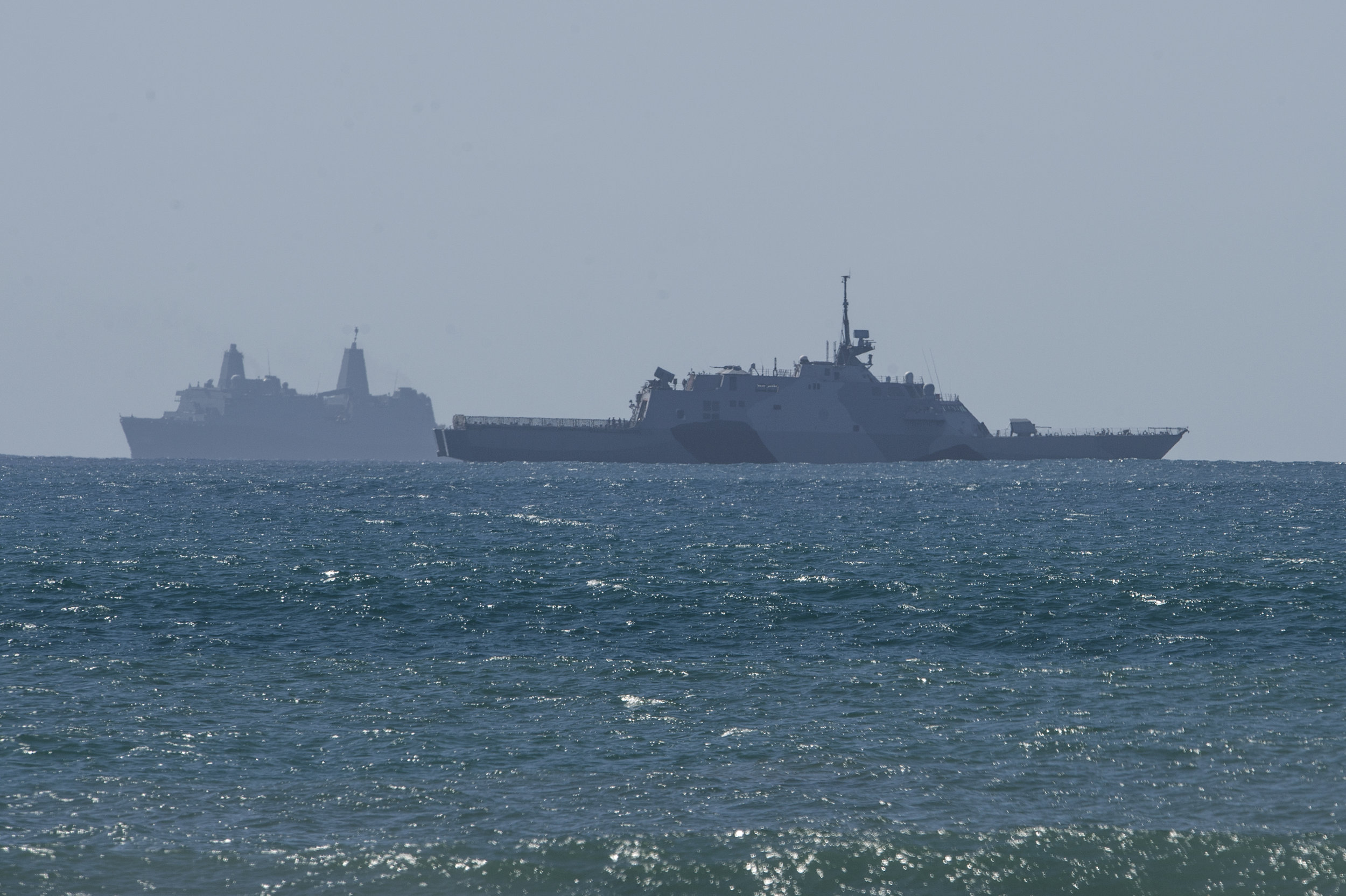
Freedom-class LCS St. Louis (LCS-19), left, in Marinette, Wisc., on Dec. 15, 2018, as Billings (LCS-15) is under construction and preparing for commissioning. US Navy Photo

NATIONAL HARBOR, Md. – Littoral Combat Ship builders are researching how to cram in additional lethal power into the existing Freedom- and Independence-variant ships.

Lockheed Martin and Austal USA are each conducting a two-phase look at how to upgrade the original LCS hulls, Joe DePietro, Lockheed Martin vice president of small combatants and ship systems, told USNI News earlier this month. The move came from a call in 2017 from Chief of Naval Operations Adm. John Richardson to backfit more capabilities onto the LCS.

“What they did is, underneath our class design services contract that we already have, they issued a technical instruction, where we were awarded roughly $2 million to go start the work on Phase 1 to develop the packages that would be for the installation and integration of those systems,” he said.

Those systems include Raytheon and Kongsberg’s anti-ship Naval Strike Missile, the Nulka MK 53 Decoy Launching System (DLS), the SLQ-32(V)6 Surface Electronic Warfare Improvement Program (SEWIP) system, and a modification to the ship’s fire control system for its 57mm guns.

The work also includes a look into a possible upgrade of the ship’s TRS-3D combat radar.

“They haven’t made a final decision on what they would want to do on radar upgrades,” DePietro said, noting that Lockheed Martin’s LCS-17 and beyond are already set to use a solid-state version of the radar, the TRS-4D.
“And then the Austal USA ship has the [SAAB] Sea Giraffe radar, which has also gone into a solid-state version. So they’re having us look into those two options as well as, you know, future technologies which could include other rotating solid-state arrays.”

Additionally, Lockheed is installing the Component-Based Total-Ship System – 21st Century (COMBATSS-21) combat system, derived from the Aegis Combat System common source library, on the Austal-built Independence-variant ships to create a common training and logistics infrastructure for both variants.

The Navy is set to review the upgrade plans this month, ahead of a planned draft request for proposal, DePietro said.

The second phase of upgrades could include backfits of laser weapons and the installation of an eight-cell Mk-41 Vertical Launch System on the Freedom variant, or newly developed single-cell Mk-41 launchers throughout the ship.

In addition to the lethality upgrades, Lockheed is studying using the LCS platform as a mothership for the Navy’s planned fleet of unmanned surface vehicles.

“We’re trying to study that under our own investment while the Navy looks at these. To really try to offer, what’s the right capability for the right price for the LCSs so they’re relevant tomorrow, today, et cetera,” DePietro said.

USS Independence (LCS-2) sails in the eastern Pacific on Feb. 27, 2019. US Navy PhotoA spokesman for Austal USA declined to comment on the company’s work on the Independence variant when reached by USNI News.

USS Independence (LCS-2) sails in the eastern Pacific on Feb. 27, 2019. US Navy PhotoA spokesman for Austal USA declined to comment on the company’s work on the Independence variant when reached by USNI News.

Littoral Combat Ship Report to Congress

May 20, 2019 5:16 PM

The following is the May 17, 2019 Congressional Research Service report, Navy Littoral Combat Ship (LCS) Program: Background and Issues for Congress.

From the report

The Navy began procuring a small surface combatant called the Littoral Combat Ship (LCS) in FY2005, and a total of 35 LCSs have been procured through FY2019, including three in FY2019. The total of 35 LCSs is three more than the 32 the Navy says are required under its 355-ship force-level goal. The Navy wants FY2019 to be the final year of LCS procurement, and it has not requested the procurement of any additional LCSs in its FY2020 budget submission.

The Navy wants to shift procurement of small surface combatants in FY2020 to a new frigate called the FFG(X). The Navy’s proposed FY2020 budget requests funding for the procurement of the first FFG(X). Five industry teams are currently competing for the FFG(X) program. Two of these teams are offering designs for the FFG(X) that are modified versions of the two LCS designs that the Navy has procured in prior years. The other three industry teams are offering designs for the FFG(X) that are based on other existing ship designs. One of these three other industry teams is proposing to build its design at one of the LCS shipyards. The Navy plans to announce the outcome of the FFG(X) competition in the fourth quarter of FY2020. The FFG(X) program is covered in detail in another CRS report.

The Navy’s 355-ship force-level goal is the result of a Force Structure Analysis (FSA) that the Navy conducted in 2016. The 2016 FSA established a force-level goal for a 355-ship Navy with 52 small surface combatants, including 32 LCSs and 20 frigates. The Navy conducts a new or updated FSA every few years, and is currently conducting a new FSA that is scheduled to be completed by the end of 2019. Navy officials have stated that this new FSA will likely not reduce the required number of small surface combatants, and might increase it. Navy officials have also suggested that the Navy in coming years may shift to a new fleet architecture that will include, among other thing, a larger proportion of small surface combatants.

The LCS is a relatively inexpensive surface combatant equipped with modular mission packages. The LCS program includes two very different LCS designs. One, called the LCS-1 or Freedom-class design, was developed by an industry team led by Lockheed. The other, called the LCS-2 or Independence-class design, was developed by an industry team that was then led by General Dynamics. LCS procurement has been divided more or less evenly between the two designs. The LCS-1 design is built at the Marinette Marine shipyard at Marinette, WI, with Lockheed as the prime contractor. The LCS-2 design is built at the Austal USA shipyard at Mobile, AL, with Austal USA as the prime contractor.

The LCS program has been controversial over the years due to past cost growth, design and construction issues with the first LCSs, concerns over the survivability of LCSs (i.e., their ability to withstand battle damage), concerns over whether LCSs are sufficiently armed and would be able to perform their stated missions effectively, and concerns over the development and testing of the modular mission packages for LCSs. The Navy’s execution of the program has been a matter of congressional oversight attention for several years.

A current issue for Congress is whether to procure any LCSs in FY2020, and if so, how many. Opponents could argue that the total number of LCSs procured in prior years exceeds the Navy’s stated requirement, and that adding funding to the Navy’s FY2020 shipbuilding account for procuring one or more additional LCSs could reduce FY2020 funding for other Navy programs. Supporters could argue that procuring additional LCSs in FY2020 could provide a hedge against delays in the FFG(X) program and help the Navy achieve its small surface combatant force-level goal more quickly. Another issue for Congress concerns future workloads and employment levels at the two LCS shipyards if one or both of these yards are not involved in building FFG(X)s.

5248208.jpg

Navy Conducts First LCS Advanced Training with Pair of Ships; Larger Event Planned this Summer

By: Megan Eckstein

May 6, 2019 10:12 AM

Lt. Ryan Griffith acts as the tactical action officer as Cmdr. Edward Rosso, commanding officer of the Independence variant littoral combat ship USS Montgomery (LCS 8), observes operations during a surface warfare scenario aboard the ship. Montgomery is underway in the eastern Pacific conducting the first-ever LCS surface warfare advanced tactical training (SWATT) event hosted by the Naval Surface and Mine Warfighting Development Center (SMWDC). US Navy photo.

The Navy conducted its first advanced tactical training event with the Littoral Combat Ship, ahead of USS Montgomery’s (LCS-8) deployment to the Pacific later this year.

Montgomery’s training event was a smaller version of the Surface Warfare Advanced Tactical Training (SWATT) events that cruisers and destroyers (CRU/DES) and amphibious ships go through ahead of their deployments. Montgomery conducted its five-day at-sea training with just one other LCS and a replenishment oiler, Lt. Cmdr. Nick VanWagoner, the lead planner for the LCS SWATT and a surface warfare/anti-submarine warfare (SuW/ASW) warfare tactics instructor (WTI), told USNI News.

The next two LCS crews to deploy, however, will be included in a larger cru/des SWATT event this summer, as the Naval Surface and Mine Warfighting Development Center (SMWDC) learns more about the capabilities and limitations of the LCS and how to ensure the crews are trained for both solo and larger formation operations.

“What the demand signal was for USS Montgomery was really no different than what it is for our cru/des ships that deploy in strike groups or our amphibious ships that deploy in amphibious ready groups. The intent was to prepare that ship for when she deploys, no matter how the fleet commander chooses to employ her, to effectively integrate and operate with other ships, platforms and warfare commanders,” VanWagoner told USNI News.

When Montgomery deploys in the coming months, it will be different than other surface ships in the fleet: it will have a minimally manned crew of about 70 or so sailors, compared to about 350 on destroyers; it will have just a surface warfare mission package onboard compared to the multi-mission cruisers and destroyers; and its Blue Crew, which went through the recent SWATT event, will rotate with a Gold Crew every four to six months to keep the ship hull forward for about 16 months at a time.

VanWagoner said the first LCS SWATT sought to address some of those issues, including what a small crew size meant for the endurance of the ship during high-tempo operations and the ability to execute one event while planning ahead for the next mission.

“LCS has different endurance capabilities than a ship that’s manned with 350 sailors. And so the crew of that ship has to deliberately plan around those capabilities to ensure that they can meet mission. That was one of our focus areas actually during the advanced tactical training we provided – when the ship’s crew was faced with conducting a number of fairly complex tactical scenarios back-to-back, ensuring they were executing their PBED (plan, brief, execute, debrief) process underway and being ready to execute the following event. It was something that we had to be deliberate about, but it didn’t hamper our operations at sea,” he said.

“[The LCS’s] man, train and equip process is a little bit different than what we use for cru/des or amphibious ships today, and there was some learning from our perspective on the planning process to ensure that as we scheduled events or as we were designing exercises that we accounted for some of those differences,” he added.
“But at the end of the day they ended up not being very significant. We learned a lot about what the ship’s combat system’s capabilities are and are excited to see her deploy in support of tasking.”

Whereas cruisers and destroyers are expected to conduct offensive and defensive missions on the surface, in the air and under the sea, the LCS will only carry one mission package at a time, with Montgomery deploying with just a surface warfare mission package. Still, VanWagoner said SMWDC wanted to test the ship’s abilities to defend itself in other domains, particularly in anti-air warfare.

The LCS’s capabilities are limited compared to a destroyer, he said, and “that’s going to color its ability to conduct sustained regional air defense. But we designed exercises to ensure that, should they need to, they could integrate into a fleet air defense construct and execute point defense procedures to protect themselves while deployed.”

During Montgomery’s five days at sea, the LCS worked with Surface Division 11 staff embarked aboard USS Independence (LCS-2). Under the current LCS fleet organization, Independence primarily serves as a test ship, and the division staff oversees one training ship and three deployable ships focused on surface warfare.

The Surface Division 11 staff took tactical control of Montgomery during one part of the exercise and also filled the role of warfare commander for part of the exercise, to simulate how Montgomery might be asked to fall under another organization once in theater. Montgomery had Helicopter Sea Combat Squadron (HSC) 23 embarked with its MH-60S helicopters, as well as the MQ-8 Fire Scout.

Additionally, the crew got to conduct life-fire events with the crew-served weapon and the mission package’s 30mm gun. As a capstone event, the crew used the SeaRAM missile defense system and defeated the threat in the first salvo, VanWagoner said.

“All of the live-fire events were very successful, expended a bunch of ammunition, employed their weapon systems against threats that we presented to them during the exercises.”

Montgomery also conducted a refueling at sea with USNS Rappahannock (T-AO-204) towards the end of the SWATT, VanWagoner said.

“Other ships, platforms, the [composite warfare commander] construct – all of that is very important to SMWDC’s methodology as we receive ships out of the basic phase and prepare them for fleet integration,” he said.

This summer, two LCS crews – the first deploying crew of USS Gabrielle Giffords (LCS-10) and the Gold Crew of Montgomery embarked aboard training ship USS Jackson (LCS-6) – will conduct a SWATT with a carrier strike group’s surface ships “and see how those (LCSs) do operating in a little bit more complex CWC construct and operations at sea,” VanWagoner said.

Ahead of that larger event, he noted, “some of our focus is going to be on preparing the warfare commanders and ensuring that they understand capabilities and limitations of these platforms that they have to employ.”

Asked what the SWATT training demand signal hinted at for what to expect from the first LCS deployment abroad since the LCS fleet was reorganized, VanWagoner said, “I can’t anticipate fleet commander tasking for that platform when she’s in theater. We intended and were successful in providing training that allowed her to be capable and flexible to meet many taskings. But what we observed embarked on USS Montgomery was a capable platform and a very capable crew that is going to be successful in executing a wide number of missions.”

A member of the visit, board, search and seizure team boards the Independence variant littoral combat ship USS Montgomery (LCS 8) during a training exercise aboard the ship on April 21, 2019. US Navy photo.

A member of the visit, board, search and seizure team boards the Independence variant littoral combat ship USS Montgomery (LCS 8) during a training exercise aboard the ship on April 21, 2019. US Navy photo.

Machinist’s Mate 2nd Class William P. Snoots, Gunner’s Mate 2nd Class John Eric Faulkner and Gunner’s Mate 1st Class Nicholas Rios practice detaining a non-compliant crew member during a visit, board, search and seizure exercise aboard the Independe…

Machinist’s Mate 2nd Class William P. Snoots, Gunner’s Mate 2nd Class John Eric Faulkner and Gunner’s Mate 1st Class Nicholas Rios practice detaining a non-compliant crew member during a visit, board, search and seizure exercise aboard the Independence variant littoral combat ship USS Montgomery (LCS 8) on April 21, 2019. US Navy photo.

Budget Concerns Led Huntington Ingalls to Sit Out Coast Guard Icebreaker Contest

By: Ben Werner

May 2, 2019 6:48 PM

Ingalls Shipbuilding lands the 700-ton deckhouse on the amphibious assault ship Tripoli (LHA 7) on July 9, 2016. Ingalls Shipbuilding photo.

The U.S. Coast Guard offered industry the potential for a multi-ship, multi-year, multi-billion-dollar program in its heavy icebreaker competition – but funding uncertainties gave some of the nation’s largest shipbuilders cold feet when it came time to bid.

Mike Petters, chief executive of Huntington Ingalls Industries, said his company opted to pass on bidding for the Polar Security Program, even after being involved in the program early on, because of concerns over how it would fit into HII’s workload. Petters addressed the Polar Security Cutter contract and other shipbuilding issues during a conference call with analysts to discuss the company’s first quarter financial results.

“As the program evolved,” Petters said, “it appeared to us that the alignment of our capacity, the budget, and the requirements just didn’t’ really match up well for us.”

HII wasn’t alone in passing on the Polar Security Cutter project. Before the Coast Guard released its request for proposals in 2018, General Dynamics officials had told USNI News they were interested in the program. However, like HII, when it came time to bid General Dynamics also passed, according to company officials.

On April 24, the Coast Guard awarded VT Halter Marine Inc. a $745-million detailed design and construction contract to build the first-in-class heavy icebreaker.

The Polar Security Cutter program’s path to being funding during the past year highlights the current risks shipbuilders face when planning bids for new projects.

A year ago, when the Coast Guard released its requests for proposals, Coast Guard officials expected five shipbuilders to bid on the program, USNI News previously reported.

However, during the summer the Polar Security Cutter’s path to becoming a funded program hit a wall. The Senate appropriated $755 million for the program, but the House of Representatives’ budget zeroed out a variety of programs, including the Polar Security Cutter, to provide $5 billion to build a wall along the U.S. border with Mexico. For months, until Congress passed a budget earlier this year, the contracting process was frozen.

Petters told analysts Thursday morning, “while we stayed involved technically, we made (the Polar Security Cutter) much less of a priority for our business.”

As for new programs coming, notably the Navy’s new future frigate (FFG(X)), Petters said HII is “intensely interested” but warned analysts the current spending-friendly atmosphere on Capitol Hill could quickly change, causing the Navy to scale back the scope of programs.

In the case of the frigate, Petters said the Navy, ahead of next year’s expected contract award, already appears to be preparing the industry for a possibly smaller program.

“As far as how that program is going to come out, there have been some changes, from a big contract for 20 ships to now maybe something different from that.”

The Navy’s Fiscal Year 2020 budget requests $1.3 billion to purchase its first-in-class guided-missile frigate, for a program now calling for buying nine hulls by 2024. Along with HII, the Navy awarded Austal USA, Lockheed Martin, Fincantieri Marine and General Dynamics Bath Iron Works each $15-million conceptual design contracts to hone their frigate designs.

Still, Petters said HII is preparing for the possibility of being awarded the frigate contract. The company already invested in its Ingalls Shipbuilding yard to support the frigate program. An award would come just as HII is winding down its production of the Coast Guard’s National Security Cutter.

“So, from a capacity standpoint, it feathers right into our business in a very productive way,” Petters said of a possible frigate award. “It’s a Coast Guard program kind of moving toward a Navy program, so I’d hate to say that that’s a hot production line, but it’s pretty warm.”

Taking a longer-term view, Petters said for most of his career the Navy’s shipbuilding budget, formally known as the Navy’s Shipbuilding and Conversion (SCN) appropriation account, hovered around $15 billion. During the past few years, the Navy increased its shipbuilding budget to between $24 billion and $25 billion.

“The question for us is, is this the new standard, are we going to be in this 23, 24 or 25 (billion dollar) range for a while, or are we going to at some point fall to that $15 billion level,” Petters said. “And the reason that is so important for us is because it all comes down to how does Columbia (ballistic missile submarine program) get paid for.”

An SCN appropriation of between $24 billion and $25 billion means there’s enough money to fund the Columbia-class submarine and the other programs HII is working on, Petters said. A higher SCN appropriation level would send industry the message that a second frigate block-buy could realistically occur after the initial contract award. Industry would know a block buy was possible for the platform the Navy pursues once the current Arleigh Burke Flight III guided-missile destroyer block buy expires. And there would be less uncertainty about the amphibious warship program, Petters said.

“We want to see that there’s going to be a sustained commitment to this current level of SCN account, for us to believe that the follow-on programs are going to get funded on time and efficiently, supporting hot production lines, supporting labor buildups, supporting the rhythm of the industry,” Petters said.

“At this point we’re hopeful, is the best way to put it,” Petters said. “But we’ve been here for a while, and we know these things can be cyclic.”

170504-N-EO550-341.jpg

Report to Congress on Navy Shipbuilding, Force Structure

May 2, 2019 6:59 AM

The following is the April 30, 2019 Congressional Research Service report, Navy Force Structure and Shipbuilding Plans: Background and Issues for Congress.

From the report

The current and planned size and composition of the Navy, the rate of Navy ship procurement, and the prospective affordability of the Navy’s shipbuilding plans have been oversight matters for the congressional defense committees for many years.

On December 15, 2016, the Navy released a force-structure goal that calls for achieving and maintaining a fleet of 355 ships of certain types and numbers.The 355-ship force-level goal is the result of a Force Structure Assessment (FSA) conducted by the Navy in 2016. The Navy states that a new FSA is now underway as the successor to the 2016 FSA. This new FSA, Navy officials state, is to be completed by the end of 2019. Navy officials have suggested in their public remarks that this new FSA could change the 355-ship figure, the planned mix of ships, or both.

The Navy’s proposed FY2020 budget requests funding for the procurement of 12 new ships, including one Gerald R. Ford (CVN-78) class aircraft carrier, three Virginia-class attack submarines, three DDG-51 class Aegis destroyers, one FFG(X) frigate, two John Lewis (TAO-205) class oilers, and twoTATS towing, salvage, and rescue ships. The Navy’s FY2020 five-year (FY2020-FY2024) shipbuilding plan includes 55 new ships, or an average of 11 new ships per year. The Navy’s FY2020 30-year (FY2020-FY2049) shipbuilding plan includes 304 ships, or an average of about 10 per year.

If the FY2020 30-year shipbuilding plan is implemented, the Navy projects that it will achieve a total of 355 ships by FY2034. This is about 20 years sooner than projected under the Navy’s FY2019 30-year shipbuilding plan — an acceleration primarily due to a decision announced by the Navy in April 2018, after the FY2019 plan was submitted, to increase the service lives of all DDG-51 destroyers to 45 years. Although the Navy projects that the fleet will reach a total of 355 ships in FY2034, the Navy in that year and subsequent years will not match the composition called for in the FY2016 FSA.

One issue for Congress is whether the new FSA that the Navy is conducting will change the 355-ship force-level objective established by the 2016 FSA and,if so, in what ways. Another oversight issue for Congress concerns the prospective affordability of the Navy’s 30-year shipbuilding plan. Decisions that Congress makes regarding Navy force structure and shipbuilding planscan substantially affect Navy capabilities and funding requirements and the U.S. shipbuilding industrial base.

160219-N-AV746-032.jpg

SECNAV, CNO Update Congress on Columbia SSBNs, New Large Surface Combatant

By: Sam LaGrone

May 1, 2019 8:28 PM

Ohio-class ballistic-missile submarine USS Rhode Island (SSBN-740) blue crew returns to its homeport at Naval Submarine Base Kings Bay, Ga. in 2018. US Navy Photo

CAPITOL HILL – Navy leaders told House and Senate appropriators this week that the service is ready to move out on its first new large surface ship design in a decade. Secretary of the Navy Richard V. Spencer and Chief of Naval Operations Adm. John Richardson also said the service is moving to build in more margin for its new ballistic missile submarine program.

Amid concerns the Navy’s cost and time margins for the service’s next nuclear ballistic missile submarine are growing thin, Navy leadership are meeting with contractors to ensure the program is on pace for the first boomer to move out on its first patrol in 2031.

Next week, Spencer and Richardson will meet with chief executives from Huntington Ingalls Industries and General Dynamics Electric Boat to make sure the design and construction of the Columbia-class SSBN is on track, Spencer told the House Appropriation defense subcommittee on Tuesday.

“We are sitting down with industry to do a collective assessment. While you know the Columbia-class submarine is our number-one acquisition program, it is in concert with the Virginia-class program, which is one of our most successful acquisition platforms that we have in the Navy,” Spencer said in a response to HAC-D ranking member Rep. Ken Calvert (R-Calif.).
“We are balancing risk in both of those portfolios. We do have concern, I would be remiss if I didn’t say that. We’re sitting down with industry to look at the supply chain, to look at both primes that are involved to ensure that we can manage the risk that we can build in some margin where we can. If we do not do this in lock-step with industry it will run off the rails. I guarantee you that. We’re focused on this from the executive level on down.”

On Wednesday, Richardson told the Senate Appropriations defense subcommittee that there was a drive in the service to build more margin in the $102-billion program.

“We are on schedule, but just on schedule. We are on cost, but just on cost,” Richardson told the panel.
“The secretary and I have made it very clear that looking forward and anticipating those things that will inevitably arise during testing and everything in such a complex program, we need to work diligently to build more margin into the program.”

Among the delays, last month the Government Accountability Office disclosed the Navy had lost several months in the program due to problems at the land-based testing site for the submarine’s electric drive.

“A manufacturing defect that affected the system’s first production-representative propulsion motor required extensive repair that consumed nine months of schedule margin at the land-based test facility,” read the report. “The Navy now plans to test the motor at the same time it had originally scheduled to make any final design changes before starting production. This could constrain opportunities to implement timely, corrective actions if problems are discovered during testing.”

Columbia-class boomers will be built concurrently with the Virginia-class submarine program that will be built in a teaming arrangement with sections of both classes assembled by GD’s Electric Boat facilities in Connecticut and Rhode Island and at HII’s Newport News Shipbuilding.

The Columbia program is designed to build and test the first-in-class Columbia (SSBN-826) over a period of about 10 years, while at the same time the Virginia program will move to a larger Block V design that will demand more materials from an already-thinning supplier base.

Large Surface Combatant

Richardson and Spencer also fielded questions on Wednesday from Sen. Susan Collins (R-Maine), who quizzed the pair on the Navy’s plan to move to a new hull design for the next large surface combatant by 2025 to supersede the Arleigh Burke-class (DDG-51) Flight III design.

“The Navy has moved ahead with those plans since last year, with procurement of a lead ship now scheduled for Fiscal Year 2025, which is just a couple of years after the end of the current multi-year procurement contract for the DDG-51 Flight IIIs,” she said.
“Many of us in Congress expected that we would see a subsequent multi-year contract for the Flight IIIs.”

Until recently, the Navy had planned to continue building a Flight III variant past the 10 hulls already under contract as part of a 2018 multi-year deal between HII’s Ingalls Shipbuilding in Mississippi and General Dynamics Bath Iron Works in Collins’ home state of Maine.

Instead, the service wants to develop a new large surface combatant that would use new kinds of sensors and weapons. Pentagon officials fear signals the service’s existing AN/SPY-1 and emerging AN/SPY-6 air search radars make them a target for long-range anti-ship ballistic missiles and want to develop a family of manned and unmanned ships that will take information from a variety of inputs. The lessons from the rapid acquisition program of the new guided-missile frigate and the MQ-25A Stingray unmanned aerial vehicle will help inform the program, Navy leaders have said.

“One of the things we’re doing differently is bringing in industry into a discussion of the requirements, so we don’t come up with something that’s impossible to invent and then build,” Richardson said on Wednesday. “The virtue of doing that with the frigate and the unmanned tanker has proven itself that we have much more confidence in cost and schedule, even on the lead ship.”

Truman Refueling

While the service leaders were outlining the budget before Congress, the White House had reversed a major point of the Fiscal Year 2020 budget: sidelining carrier USS Harry S. Truman (CVN-75).

At the same time Richardson and Spencer were testifying before the HAC-D on Tuesday, Vice President Mike Pence told the crew of Truman the ship would not be retired and would instead undergo a refueling and complex overhaul. The Trump Administration’s FY 2020 budget had cut the refueling as part of a deal for a two-carrier buy on the next two Ford-class carriers; the RCOH cancelation and the two-ship buy would create about $8 billion in savings that would be used to fund new systems like high-energy weapons, hypersonic missiles and unmanned surface vessels.

The move had been panned by a bipartisan group in the House and the Senate, and the four defense committees were expected to insert funds for the refeuling in the upcoming FY 2020 budget bills.

While Pence and President Donald Trump said they had changed the terms of their budget, as of Wednesday afternoon the White House has not sent over a new budget guidance to Congress, several sources confirmed to USNI News. Several defense officials also confirmed to USNI News that neither the Pentagon nor the Navy were informed of Pence’s announcement ahead of his speech on Truman.

The topic did not come up at the Wednesday’s SAC-D hearing with Navy leadership nor by Acting Defense Secretary Patrick Shanahan’s House Appropriations defense subcommittee budget hearing.

Spencer told reporters following the Navy budget hearing that the service would carry out the White House instructions.

USS Stockdale (DDG-106) transits the Gulf of Oman on Jan. 5, 2019. US Navy Photo

USS Stockdale (DDG-106) transits the Gulf of Oman on Jan. 5, 2019. US Navy Photo

An undated artist’s rendering of the planned Columbia-class submarine. Naval Sea Systems Command Image

An undated artist’s rendering of the planned Columbia-class submarine. Naval Sea Systems Command Image

Artists rendering of the first planned Flight III Arleigh Burke destroyer, Jack H. Lucas. HII Photo

Artists rendering of the first planned Flight III Arleigh Burke destroyer, Jack H. Lucas. HII Photo

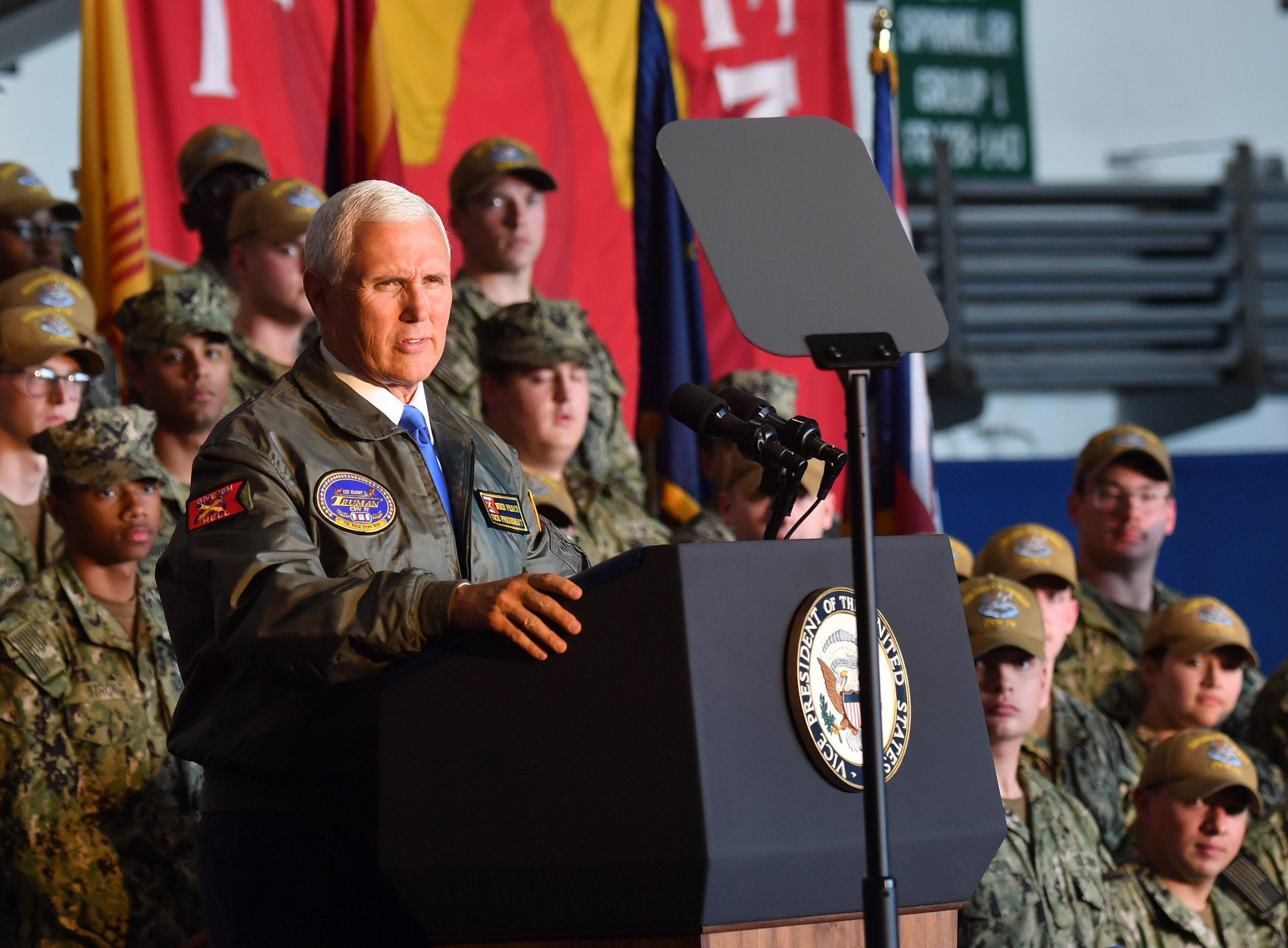
Vice President Mike Pence speaks to Sailors during an all-hands call in the hangar bay aboard the Nimitz-class aircraft carrier USS Harry S. Truman (CVN-75) on April 30, 2019. US Navy Photo

Vice President Mike Pence speaks to Sailors during an all-hands call in the hangar bay aboard the Nimitz-class aircraft carrier USS Harry S. Truman (CVN-75) on April 30, 2019. US Navy Photo

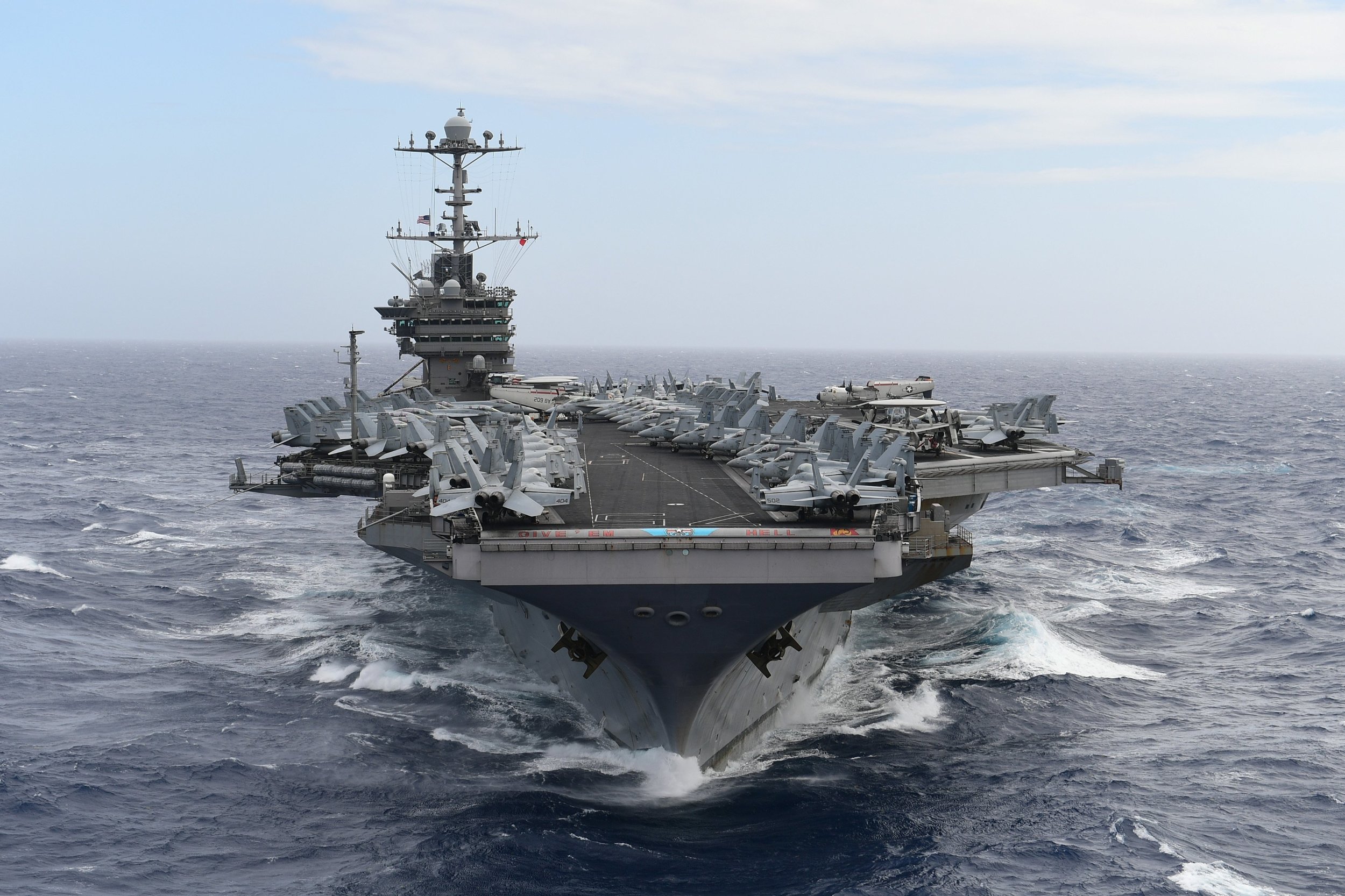
The Nimitz-class aircraft carrier USS Harry S. Truman (CVN 75) transits the Atlantic Ocean on Dec. 12, 2018. US Navy photo.

The Nimitz-class aircraft carrier USS Harry S. Truman (CVN 75) transits the Atlantic Ocean on Dec. 12, 2018. US Navy photo.

Report to Congress on U.S. Navy Frigate FFG(X) Program

USNI.org

April 24, 2019 7:37 AM

The following is the April 4, 2019 Congressional Research Service report, Navy Frigate (FFG[X]) Program: Background and Issues for Congress.

From the report

The FFG(X) programis a Navy program to build a class of 20 guided-missile frigates(FFGs). The Navy wants to procure the first FFG(X)in FY2020, the next 18 at a rate of two per year in FY2021-FY2029, and the 20thin FY2030. The Navy’s proposed FY2020 budget requests $1,281.2 million for the procurement of the first FFG(X). The Navy’s FY2020 budget submission shows that subsequent ships in the class are estimated by the Navy to cost roughly $900 million each in then-year dollars.

The Navy intends to build the FFG(X) to a modified version of an existing ship design—an approach called the parent-design approach. The parent design could be a U.S. ship design or a foreign ship design.At least five industry teams are reportedly competing for the FFG(X) program. Two of these teams are offering designs for the FFG(X) that are modified versions of the two Littoral Combat Ship (LCS)designs that the Navy has procured in prior years. The other three industry teams are offering designs for the FFG(X) that are based on other existing ship designs. One of these three other industry teams is proposing to build its design at one of the LCS shipyards. The Navy plans to announce the outcome of the FFG(X) competition in July 2020. The LCSprogram is covered in detail in another CRS report.

The FFG(X) program presents several potential oversight issues for Congress, including the following:

  • whether to approve, reject, or modify the Navy’s FY2020funding request for the program;whether the Navy has appropriately defined the cost, capabilities, and growth margin of the FFG(X);

  • the Navy’s intent to use a parent-design approach for the FFG(X) program rather than develop an entirely new (i.e., clean-sheet) design for the ship;

  • cost, schedule, and technical risk in the FFG(X) program;

  • whether any additional LCSs should be procured in FY2020 as a hedge against potential delays in the FFG(X) program;

  • the potential industrial-base impacts of the Navy’s plan to shift in FY2020 from procuring LCSs to procuring FFG(X)s;

  • whether to build FFG(X)s at a single shipyard, as the Navy’s baseline plan calls for, or at two or three shipyards;and

  • the potential impact of the FFG(X) program required numbers or capabilities of U.S. Navy cruisers and destroyers

frigateFridtjof.jpg

New Defense Strategy, Commitment to Readiness Drove Major Shifts in Navy Budget

By: Megan Eckstein

USNI.org

April 9, 2019 9:49 AM

Harry S. Truman Carrier Strike Group participates in a strait exercise in the Atlantic Ocean on April 7, 2019. US Navy Photo

THE PENTAGON – The Navy’s Fiscal Year 2020 budget request includes tectonic shifts in how the Navy does business – swapping a Nimitz-class aircraft carrier for unmanned surface vehicles and other technologies – and it comes even as the service is reevaluating what sized fleet and what mix of ships the Navy needs to meet future challenges.

Though a force structure assessment tends to guide acquisition decisions in the budget process, the Navy has made clear that the most recent FSA is dated and that service leaders are going through the process of compiling a new one, due out at the end of this calendar year.

So, with the current FSA being null and void, what guided the Navy’s big budget decisions this year?

“The National Defense Strategy defines the vision of the military,” Deputy Chief of Naval Operations for Warfare Systems (OPNAV N9) Vice Adm. Bill Merz told USNI News.
“The Navy is going to be a part of a much more lethal, distributed, agile joint force.”

“That vision has not changed, and that’s what we’re after. That’s what drove the 355-ship navy under the last FSA, and we’ll see what this one – we expect the requirement probably to go up this time just because of the distributed maritime operations concept that the fleets are employing now that drives a lot of enabling requirements like logistics,” the admiral continued.

Merz noted that FSAs typically only last a few budget cycles and that it’s normal to redo them periodically. But many things have changed since the last FSA was released in December 2016: the Trump Administration took office, former Defense Secretary James Mattis penned a new National Defense Strategy, the Navy adopted a distributed maritime operations concept that changes how the fleet would operate and sustain itself, new leadership in all the combatant commands have taken over, the frigate program has matured and appears much more capable than previously thought, the submarine industrial base is struggling to keep up even as its workload is increasing, and much more.

Merz acknowledged that the upcoming FSA will likely be very different than the one on the books today. But he also said that the Navy’s budget submission was well informed despite the lack of an FSA to guide it.

“We are constantly doing wargames and analysis. It’s the same analysis, threat vectors, intelligence reports that get fed into the FSA. So it’s not the FSA driving those; the FSA’s just a beneficiary of it, like so many other things we look at,” he said.
“So we don’t need the FSA to tell us we need unmanned systems or directed energy, rail guns and that sort of stuff. Those are done by threat analysis for specific threats and capability gaps that those threats generate that we know we have to fill. How much of it we need based on a campaign plan or an [operational] plan? The FSA will have an opinion on how many of those things do you need, where do you need them, what kind of platforms need to be carrying them, that sort of stuff. But the actual capabilities, we have other methods through our research labs and everything else that determine that.”

Another driving factor in the Navy’s FY 2020 budget request is balance. Merz brought up balance many times during the interview with USNI News, noting that the fleet could not outsize the Navy’s ability to sustain it, man it and modernize it.

“Understanding exactly what we need for readiness drives how much we can invest in the future. So the readiness is the here and now, and the investments are the capabilities we’re trying to bring into these accounts,” he said.
“We have funded virtually every maintenance account, whether air or surface ship, to what we call the max executable rate. … Matter of fact, we have an unfunded priority list that adds even more because industry has told us, hey, we think we can execute a little more.”

Still, the Navy is struggling to understand what those costs will be as the Navy grows larger.

“We had been shrinking the Navy for 40 straight years – that includes aircraft and ships and everything else – so there’s a new addendum in the shipbuilding plan about sustainment, what the cost is going to be to sustain that 355-ship navy. We don’t really even have the complex modeling to figure that out, so that’s one of the things we’re working on is developing the models,” Merz said.
“We have one of the largest budgets ever, and it’s sustaining about a 300-ship navy, not a 355-ship navy. We have to get a lot more efficient, we’re going to need a lot more resources, or god forbid we have to get smaller again – and that just creates a lot of risk in what we’re trying to do. Good news is, I think everybody is rallying around this. They understand the chore, it’s ahead of the panic, it’s about 10 to 20 years out – but it does give you a sense for what that challenge is going to be and we’re going to have to start working on it.”

The Navy took a turn under former Navy Secretary Ray Mabus to grow in size, ending that decades-long shrinkage, but Merz said sequestration and other factors led the Navy to make the decision to grow in an unbalanced way.

“We came through a period, and Secretary Mabus did what he could, but that was an era of untenable decisions: you’re either going to buy a ship or you’re going to pay for readiness. Some years we did one, some years we did the other. And in the end we found ourselves pretty far out of balance on readiness. And some of the challenges have manifested in horrible ways, and we’re not going to go back to being an unbalanced navy – so whatever sized navy we are, it’s going to be a balanced navy. The proper investments in readiness versus the proper investments in the advanced capability.”

Merz said the renewed focus on readiness to create a balanced force began in 2016 and is already showing results. Aviation readiness rates, which at times dropped below 50 percent, have “taken dramatic turns lately in a positive direction” thanks to funding spares, logistics, engineering and depot maintenance accounts to the maximum executable levels for the last few budget cycles. Rear Adm. Scott Conn told lawmakers last week that those rates now bounce between about 63 percent and 75 percent for Super Hornets – just short of the 80-percent mission capable rate the services are aiming for in their fighter fleets.

“We’re on a very aggressive recovery ramp. We’re very pleased that the recovery effort that essentially started in FY ’16 and ’17. When we turned that spigot wide open, we all kind of got into a pile-on with industry trying to make this maintenance a lot more efficient, and it’s starting to pay off now. I think we’re pretty satisfied that we turned it; we’re not satisfied until we see that we can sustain this ramp. And then once we get to the target of 80 percent, which is the [tactical aircraft] number but internally we’re applying that to [all aircraft] … is there enough enduring reform there and efficiencies to make sure we stay there? And that’s what we’re after. Right now the vectors are positive … and now the trick is to not take your foot off that pedal.”

Balance also means making the fleet more lethal and more netted, to support the distributed maritime operations concept, Merz said.

“Directed energy, hypersonics – those are the types of capabilities we’re most interested in, and you see a fairly significant push and support money to get those things fielded. Railgun is still a little bit nascent for us, that’ll just compete against a lot of other capabilities in that same family. We’re not wedded to railgun; we’re very interested in the technology, but like a lot of technologies, we’re committed to it until we have to compete it against something else and we’ll see how it does,” Merz said on the lethality piece.

On networks, he declined to dive into too many details, but he said the Navy Tactical Grid and the Joint Tactical Grid will be important to the way the Navy hopes to do business in the future.

“We know these netted effects are really where we need to get to to maximize the lethality out of any fighting force we have. We’re a large, powerful navy; but we’re a large, powerful navy distributed all over the planet. So in any particular part of the world, we may not be so large, and the way we get after that is just making sure we’re connected and netted and we can coordinate the effects we need,” he said.

Merz said the Navy had lost sight of this balance before but vowed not to do it in the future. A top priority, he said, is “remaining balanced in the Navy – don’t over-commit to readiness, don’t over-commit to investment. It’s kind of like the rising tide floats all ships kind of thing – we have a history of leaving a few of those ships behind, and I don’t think you’re going to see us do that again.”

Navy’s 355 Ship Fleet Infogram

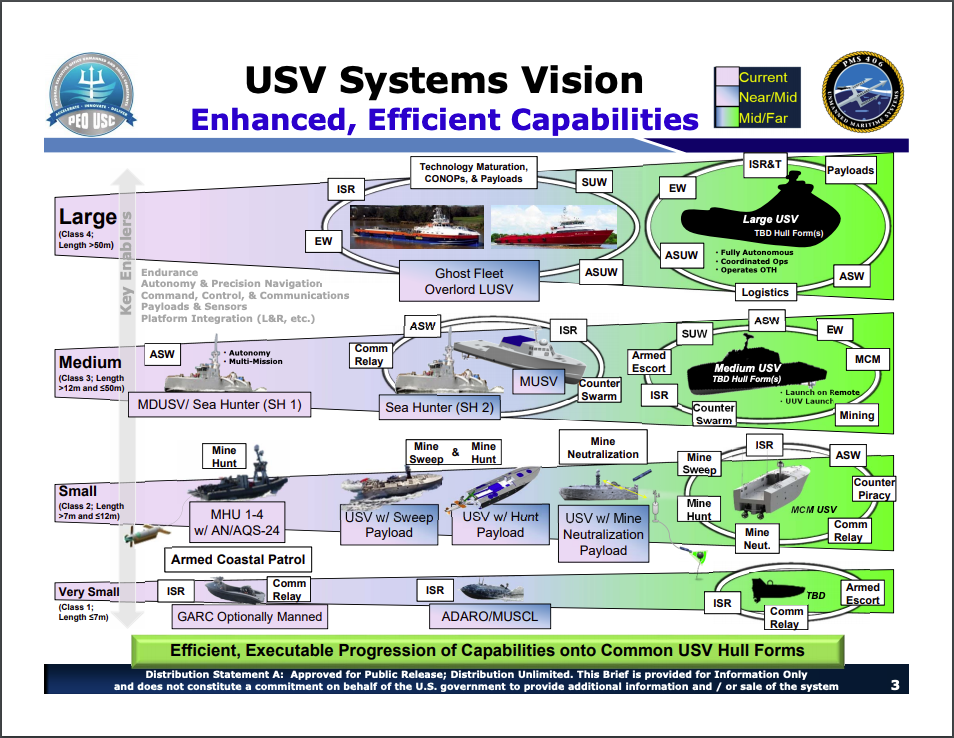
US Navy’s unmanned surface concept. NAVSEA Image

US Navy’s unmanned surface concept. NAVSEA Image

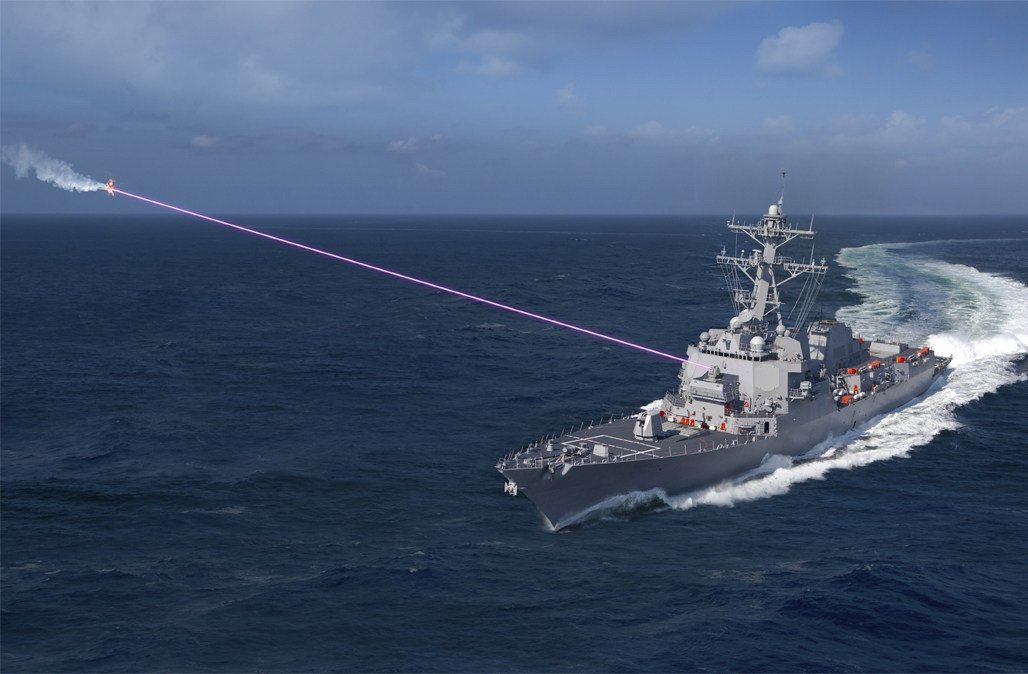
Artist’s concept of a HELIOS laser system aboard a U.S. destroyer. Lockheed Martin Image

Artist’s concept of a HELIOS laser system aboard a U.S. destroyer. Lockheed Martin Image

Navy Simulating Efficient Shipyard Layouts as Part of 20-Year Modernization, Optimization Effort

By: Megan Eckstein

USNI.org

April 5, 2019 11:59 AM

Sailors assigned to the aircraft carrier USS Dwight D. Eisenhower (CVN 69) observe as the ship pulls into Norfolk Naval Shipyard in Portsmouth, Va., on Aug. 5, 2017. US Navy photo.

The Navy is creating “digital twins” of its four public shipyards so engineers can conduct modeling and simulation and identify ideal new configurations for the yards to boost productivity.

As part of its 20-year, $21-billion effort to modernize and optimize the four yards, the Navy is in the early stages of this simulation work, meant to show potential new layouts of the yards’ welding shops, pump shops, material storage, office spaces and more could contribute to better workflow and reduced man hours.

The Shipyard Infrastructure Optimization Plan (SIOP) effort will also include repairing and enhancing dry docks and replacing aging capital equipment, but the Navy hopes to hash out the layout issues early on to avoid installing large capital equipment and then having to move it a few years later.

“The Shipyard Infrastructure Optimization Plan articulated a vision that shipyard infrastructure has three interdependent components: the dry docks, the facilities and the capital equipment; and that these configurations are fundamentally linked to the shipyards’ ability to execute the mission they are tasked to do,” Steven Lagana, program manager for the SIOP effort at Naval Sea Systems Command (NAVSEA), said in a Navy news release this week.
“We are utilizing modeling and simulation as a tool to integrate these components to better inform the desired infrastructure layout. Through this, the Navy will be in a better position to make meaningful, long-lasting investments that not only address the condition of the facilities and equipment but also change the way the work is conducted. Once we’re finished, the Navy will recover more than 300,000 work days per year, every year.”

A first step is the digital twin effort, where the yards as they exist today will be put into a modeling and simulation system that can then generate numerous options to optimize work flow.

Assistant Secretary of the Navy for Research, Development and Acquisition James Geurts told reporters last week that a pilot program is taking place now at the Pearl Harbor Naval Shipyard and Intermediate Maintenance Facility in Hawaii. A master planner there has designed a notional new design for the yard and is running simulations on transit times for various types of personnel to understand what shops, offices and other facilities need to be located near what other facilities to help optimize travel flow.

The impact of each individual having to walk an inefficient path from location to location to do their job may seem minute, but when multiplied by the total workforce over the span of a maintenance availability, an inefficient yard design can extend the amount of time it takes to repair a ship quite a bit.

NAVSEA commander Vice Adm. Tom Moore told USNI News previously that at Norfolk Naval Shipyard in Virginia, “the workforce walks the circumference of the earth every day getting to and from the worksite.” He said a 6-percent inefficiency in their time spent walking around the yard that could be eliminated with a more appropriate flow from the shops down to the drydocks.

The SIOP program office is holding its first industry day on April 8 at Washington Navy Yard, and the event is filled to capacity.

“We’re sold out,” Lagana said in the news release. “We have more than 100 companies from 19 states and the District of Columbia who are coming to hear about the program and see how they can be part of this once-in-a-century team that will deliver the shipyards the Navy needs.”

170616-N-N0101-320.jpg