LCS Conducts First South China Sea FONOP of 2020

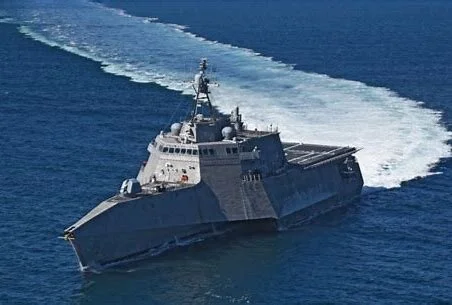
USS Montgomery near Fiery Cross Reef, Jan. 25, 2019 (USN)

BY THE MARITIME EXECUTIVE  01-28-2020 09:55:00 

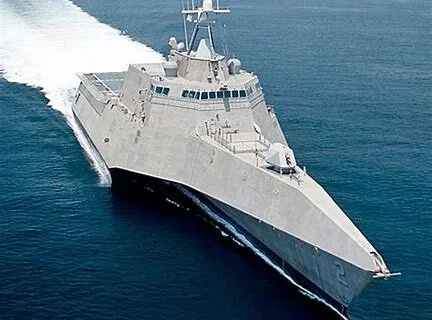
On Saturday, the Independence-class Littoral Combat Ship USS Montgomery conducted the U.S. Navy's first freedom of navigation operation (FONOP) in the South China Sea for 2020. According to the Navy, the vessel passed near Johnson Reef and Fiery Cross Reef - two Chinese military installations in the contested Spratly Islands. 

“By engaging in innocent passage without giving notification or asking for permission, the United States challenged the unlawful restrictions imposed by China, Vietnam and Taiwan, the United States demonstrated that innocent passage may not be subject to such restrictions," said a spokesperson for U.S. 7th Fleet. (Vietnam and Taiwan also claim exclusive authority over the waters near these land features.)

According to the Chinese People's Liberation Army (PLA) Southern Theater Command, the course of events ran differently. Col. Li Huamin, a spokesperson for the command, told state-owned media that PLA air and naval forces tracked down, identified and "expelled" the USS Montgomery. Li described Montgomery's transit as a "flagrant attempt at navigation hegemony," and he alleged that the "provocation" was timed to coincide with an important Chinese holiday.   

China claims "undisputed sovereignty" over the majority of the South China Sea, including substantial portions of the EEZs of neighboring nations. Chinese forces have built up a string of fortified island bases in the Spratly archipelago to assist in defending these claims. 

The transit marks a turnaround for the USS Montgomery and a new operational success for one of the two LCS vessel classes. When Montgomery set sail from San Diego in June 2019, it was the first time that an LCS had deployed in more than a year. Both LCS classes were plagued with mechanical casualties in their early years, leading to a "stand down" and a thorough overhaul of the LCS crewing and operating concept in 2016.

USS Montgomery herself experienced these early challenges. She suffered two engineering casualties on her maiden voyage in 2016; when she called at Naval Station Mayport for repairs, the aluminum vessel suffered a cracked hull and bent stringers after a severe collision with a tugboat. Once the repairs were completed, she transited through the Panama Canal, where she suffered another hull crack after alliding with a lock wall. 

OIP.NAKtWzsDeYTWzNHjKB0mwgHaEx.jpeg

USS Montgomery Conducts First 2020 FONOP in South China Sea

By: Ben Werner

January 28, 2020 11:56 AM

USNI.org

The Independence-variant littoral combat ship USS Montgomery (LCS 8) operates in the South China Sea. Navy photo

Over the weekend, Littoral Combat Ship USS Montgomery (LCS-8) conducted a freedom of navigation operation through waters near the Spratly Islands claimed by China, Taiwan and Vietnam, the Navy said.

Montgomery, an Independence-variant LCS, steamed past the Spratly Islands in the South China Sea on Saturday, according to a statement released by U.S. 7th Fleet. Montgomery’s FONOP is believed to be the first of 2020 in the South China Sea.

China, Vietnam, Taiwan, Malaysia, Brunei and the Philippines claim sovereignty over some or all of the islands in the chain.

Also, China, Taiwan and Vietnam all state they require foreign military vessels to either ask permission or provide advance notice before sailing by the islands, a requirement Navy officials and most maritime experts say is contrary to international law.

“The unilateral imposition of any authorization or notification requirement for innocent passage is not permitted by international law, so the United States challenged these requirements,” the 7th Fleet statement said. “By engaging in innocent passage without giving notification or asking for permission, the United States challenged the unlawful restrictions imposed by China, Vietnam, and Taiwan. The United States demonstrated that innocent passage may not be subject to such restrictions.”

Under the U.N. Law of the Sea Convention, a foreign warship can pass within 12 nautical miles of a territorial claim as long as it takes a direct route and doesn’t conduct military operations.

Chinese officials were quick to issue a response complaining about the U.S. operation in a region they consider part of China’s territorial waters. The Chinese military monitored Montgomery’s passage and warned the ship to leave the region, Senior Col. Li Huamin, a spokesperson for the People’s Liberation Army (PLA) Southern Theater Command, said in a statement on Tuesday. China deployed naval and air forces to track Montgomery.

“The Chinese military is determined to safeguard national sovereignty and security as well as maintain peace and stability in the South China Sea, no matter what tricks are played by U.S. ships,” Li said.

In November, USS Gabrielle Giffords (LCS-10) conducted a FONOP past the Spratly Islands, as part of the ongoing U.S. effort to uphold freedom of navigation through the region.

“The United States upholds freedom of navigation as a principle,” the 7th Fleet statement said. “The Freedom of Navigation Program’s missions are conducted peacefully and without bias for or against any particular country. These missions are based in the rule of law and demonstrate our commitment to upholding the rights, freedoms, and lawful uses of the sea and airspace guaranteed to all nations.”

The following is the full statement from U.S. 7th Fleet about the freedom of navigation operation conducted by USS Montgomery (LCS-8):

On Jan. 25, a U.S. warship asserted navigational rights and freedoms in the Spratly Islands, consistent with international law. This freedom of navigation operation (“FONOP”) upheld the rights, freedoms and lawful uses of the sea. Independence-variant littoral combat ship USS Montgomery (LCS-8) challenged the restrictions on innocent passage imposed by China, Vietnam, and Taiwan.

China, Vietnam, Taiwan, Malaysia, Brunei and the Philippines each claim sovereignty over some or all of the Spratly Islands. China, Vietnam, and Taiwan purport to require either permission or advance notification before a foreign military vessel engages in “innocent passage” through territorial seas. Under international law as reflected in the Law of the Sea Convention, the ships of all States – including warships – enjoy the right of innocent passage through territorial seas. The unilateral imposition of any authorization or notification requirement for innocent passage is not permitted by international law, so the United States challenged these requirements. By engaging in innocent passage without giving notification or asking for permission, the United States challenged the unlawful restrictions imposed by China, Vietnam, and Taiwan. The United States demonstrated that innocent passage may not be subject to such restrictions.

U.S. forces routinely conduct freedom of navigation assertions throughout the world. All of our operations are designed to be conducted in accordance with international law and demonstrate that the United States will fly, sail, and operate wherever international law allows – regardless of the location of excessive maritime claims and regardless of current events.

The United States upholds freedom of navigation as a principle. The Freedom of Navigation Program’s missions are conducted peacefully and without bias for or against any particular country. These missions are based in the rule of law and demonstrate our commitment to upholding the rights, freedoms, and lawful uses of the sea and airspace guaranteed to all nations.

Freedom of navigation operations in the South China Sea are a part of daily operations of U.S. military forces throughout the region.

OIP.ELCMc_OKcYoPxw7qOiC4bQHaFs.jpeg

Norfolk Naval Shipyard Breaks Ground on $200M Drydock Renovation

Image courtesy USN

BY THE MARITIME EXECUTIVE  01-24-2020 03:56:00 

On Thursday, Norfolk Naval Shipyard (NNSY) held a groundbreaking for the renovation of its First World War-era Dry Dock 4. The $200 million, three-year renovation is NNSY’s biggest initiative yet as part of Naval Sea Systems Command’s Shipyard Infrastructure Optimization Program (SIOP). 

“Today’s groundbreaking will ensure this historic dry dock will continue to serve the Navy and nation for the future Navy, just as it has done for the last 100 years,” said Assistant Secretary of the Navy James Geurts. “The Navy continues to invest heavily in our naval shipyard workforce and supporting infrastructure to ensure we can continue to support the world’s finest naval force now and into the future.”

SIOP is a 20-year, $21 billion program dedicated to refurbishing the nation’s four public shipyards by modernizing equipment, improving workflow and upgrading dry docks and facilities. The aging yards were not designed to handle modern submarines, and the Navy says that their infrastructure issues account for a significant part of the service's long-running sub maintenance delays. The Dry Dock 4 renovation is intended to meet the Navy’s needs for submarine overhaul for the Ohio, Virginia and future Columbia-class boats. 

NNSY, part of Naval Sea Systems Command, is one of the Navy's oldest facilities - its earliest operations predate the United States, and it came into government possession during the Revolutionary War. Dry Dock 4 was built in 1919, the first of three dry docks built at NNSY during its World War I-era expansion. Roughly 1,000 feet long, 144 feet wide and 40 feet deep - big enough for a Panamax - it ranked among the largest concrete structures in the world when it opened. Notable ships that have passed through the dock include USS Langley, the nation's very first aircraft carrier; USS Texas, a battleship that fought in both World Wars; and the battleship USS Arizona, which received modernization at NNSY a decade before she was destroyed in the attack on Pearl Harbor.

During its renovation, two-and-a-half feet of concrete will be replaced from the dry dock’s floor, as well as two feet from the sidewalls. In addition to replacing the dry dock caisson, there will be a complete restoration of the pumpwell with an upgrade for all mechanical and electrical equipment. To complete the massive overhaul, about 2,300 linear feet of mechanical and electrical services in the dock area will be replaced. In addition to the dry dock renovation, NNSY will also be renovating the adjacent Buildings 261 and 1539, which house a storage area and repair shop, and their surrounding area.

fin_FREMM-592.jpg

Navy Striving for 71% On-Time Ship Maintenance This Year, No Extensions By End of 2021

By: Megan Eckstein

January 23, 2020 3:47 PM

USNI.org

Tugboats maneuver the guided-missile destroyer USS Arleigh Burke (DDG 51) in position for dry-docking in preparation for the ship’s Extended Dry-Docking Selected Restricted Availability (EDSRA) on March 5, 2019. US Navy photo.

ARLINGTON, Va. – The chief of naval operations gave the Navy an aggressive goal to eliminate lost operational days from overrun maintenance availabilities by next year, and surface navy and maintenance community leadership believe they’re on track to do just that.

The Navy’s surface combatants and amphibious warships go through maintenance and modernization periods conducted by private companies and overseen by Naval Regional Maintenance Centers. In recent years, a combination of factors has led to abysmal on-time completion rates in the 20-percent range. Late contract awards, growth in the scope of work once maintainers start opening tanks and compartments, delays from material or labor shortages and more have all contributed to these rates.

And yet, CNO Adm. Mike Gilday wants to achieve zero lost operational days by the end of Fiscal Year 2021 – just 20 months from now.

“To responsibly grow and dynamically operate the fleet, we will predictably and effectively maintain the fleet – in peacetime and in support of conflict. As we have learned over the past decade, it is cheaper to maintain readiness than to buy it back. Our toughest near-term challenge is reversing the trend of delivering only 40 percent of our ships from maintenance on time,” Gilday wrote in a fragmentary order last month.
“We will further develop and implement better productivity metrics and identify the key levers to deliver all depot availabilities on time and in full. Our goal is to improve productivity, reduce lost days through depot availability extensions by 80 percent in FY20 compared with FY19, and eliminate lost days through depot extensions by the end of FY21.”

The fleet is up to the challenge, leaders said last week at the annual Surface Navy Association conference.

“If you look at 2018, 29 percent of ships came out of availabilities on time. In 2019, 43 percent of our ships came out of their availabilities on time. We are projecting for 2020 that 71 percent of those ships will come out of availabilities on time. That’s a lot of huge effort by both industry and Navy leadership to change the paradigm of how we’re doing ship maintenance,” Commander of Naval Surface Forces Vice Adm. Richard Brown said during the conference’s kickoff speech.

During a later panel, Commander of Naval Regional Maintenance Centers Rear Adm. Tom Anderson said the maintenance community was already devoting serious effort to improving on-time delivery rates out of maintenance availabilities, but he said Gilday’s latest command guidance has focused that conversation.

When talking to the RMCs he oversees and to the surface force commanders on each coast, “we’ve gone from a discussion that was kind of a generic discussion of, hey, I got a ship that’s going to be a little bit late, to, how am I going to maintain that schedule? And if I have some type of issue, how can I minimize the number of days? What’s the critical path on that ship? What are all the obstacles that I can remove?”

Anderson added that the Gilday guidance also created a “kind of urgency, that need to move out quickly and achieve results in the near-term.”

He pointed to a pilot program an RMC kicked off after noticing that the Military Sealift Command auxiliary ships could get through underwater hull coating work much faster than the Navy’s warships despite involving the same material and labor.

The admiral said the Navy asks its contractors to write a report on the condition of the underwater portion of the hull, submit it, allow the Navy to send back a marked up copy, revise the report, and then finally start the coating work months later – all in an effort for the Navy to feel assured that quality work will be done to keep its warships in good condition until the next maintenance availability. MSC, on the other hand, lets certified workers from its maintenance contractor do the work, an independent third party inspects the work, and then the contractor warrantees the work for a length of time. Anderson said this model caught the RMCs’ attention and is being tried out.

Asked if he thought these kinds of initiatives were enough to get to the 71-percent on-time delivery rate Brown expects to see this year and the end to late deliveries that Gilday expects in the coming years, Anderson expressed his confidence. He told USNI News during a question and answer session that most of the availabilities that will make or break the 71-percent rate have either started or are about to start. The maintenance community often says that good planning is the key to on-time delivery, but since these have already been planned and are relying on solid execution, Anderson said he established a director of material position on his staff to identify best practices and to focus on the status of materials and prioritizing where they should go.

“I’ll give you an example: if I have an availability that’s going on, and I need a certain valve, and that valve is late – but I have an availability that’s starting a little bit later and that valve’s already in the box – before, we weren’t going to that other box and taking the valve and using it” because ship sets were looked at individually instead of as assets for the whole RMC to tap into. “So the focus we have on material is one part of it,” he said of his effort to ensure success this fiscal year.

Additionally, high-level decision-making and accountability will also play a role. Though maintenance officials have said in the past that decisions need to be made closer to the waterfront to ensure timelier decisions – with recent efforts being made to delegate decisions down related to approving growth work and cost increases – for a short time, leaders actually want to do the opposite and get flag officers involved in making decisions.

“Sometimes 24 hours, if the right people aren’t paying attention, turns into a week, two weeks” of delay, Rear Adm. Roy Kitchener, the commander of Naval Force Atlantic, said during the panel discussion. Flag officers in the fleet and in the maintenance community – for the time being – will be looped into decisions that affect potential delays and how to mitigate them or whether to accept the delay with the understanding of what risk it poses to the operational fleet.

Both Kitchener and Anderson agreed this approach wasn’t sustainable in the long run, but the hope is that today’s flag officers will set precedent for how they want decisions to be made with delay-avoidance and risk-management in mind, and eventually the decisions can be delegated back down once staffs understand how the admirals want the problems handled.

As an example, Anderson said, “for ships that are in availabilities, [we should] only doing work that’s critical to that ship operating in the availability. Just because there’s money available to go do new work and growth doesn’t mean we need to spend it. And that’s part of the flag-level reviews that are going on now – it might not have been going on in the past, where if you had the money you spent it, and truth be told you might be spending it really late in the avail and driving risk into the availability.”

Ultimately, Anderson said the ability to hit this year’s expected on-time delivery rate is important for reasons beyond Gilday’s command guidance.

“What does 70-percent on-time delivery mean to the team that two years ago was delivering 26 percent of their availabilities on time? It means they’re winning,” he told USNI News.
“When you’re on the waterfront and you’re delivering 26 percent on time and you’re getting crushed, you know you’re causing pain to the operators, that’s crystal clear, and your relationship changes a little when you’re causing that much pain. … It feels miserable to be making 26 percent. So getting 70 percent, 80 percent – one, you’re winning, and you start attracting additional winners to come to the team and people are interested in staying.”
The Arleigh Burke-class destroyer USS Mahan (DDG 72) returns from sea trials Sept. 13, 2019. Mahan is wrapping up an Extended Selected Restricted Availability managed by Mid-Atlantic Regional Maintenance Center (MARMC). US Navy photo.

The Arleigh Burke-class destroyer USS Mahan (DDG 72) returns from sea trials Sept. 13, 2019. Mahan is wrapping up an Extended Selected Restricted Availability managed by Mid-Atlantic Regional Maintenance Center (MARMC). US Navy photo.

Test of Ready Reserve Force Exposes Need For Newer Ships, More People

By: Ben Werner

January 16, 2020 3:54 PM

USNI.org

National Defense Reserve Fleet Suisun Bay, Calif. in 2014. US Navy

ARLINGTON, Va. — When U.S. Transportation Command tested the ability of the nation’s maritime Ready Reserve Force to set sail on short notice, only about 40 percent of the vessels deemed ready were able to leave port.
The no-notice exercise called a “Turbo Activation,” occurred in September and involved 28 vessels from the Military Sealift Command (MSC) and the U.S. Department of Transportation’s Maritime Administration (MARAD). The ships are located on the Atlantic, Pacific and Gulf Coasts. This was the largest such exercise since 2003.

About 60 percent of the Ready Reserve Force was considered ready, and only 40 percent of those ships were able to steam out of port, retired Rear Adm. Mark Buzby, the administrator of MARAD, said Thursday at the 2020 Surface Navy Association Symposium.

“We’ve got some challenges there,” Buzby said. “It’s driving our thinking as to if this is a workable, sustainable model for the future, the way we run the ready reserve force.”

Age is the main reason why the response was so troubling, Buzby said. The vessels used are, on average, 45 years-old and they spend a lot of time sitting idle, maintained by skeleton crews. When they’re called upon to activate within 48 hours, Buzby told USNI News, the systems don’t always work.

Purchasing new ships has not been a spending priority for the military. Meanwhile, increasing spending alone will not solve all the challenges Buzby faces maintaining the ships he already has.

“I’m finding myself in competition with military sealift command for drydocking space,” Buzby said. “We both have big ships and there are a certain number of dry docks that can take our ships. We’re both kind of fighting at times for space to get in there.”

When the ships do get into drydock, Buzby said the maintenance often takes longer than anticipated because work crews discover more wear and tear problems than what was known.

“They’re more broken because they’re old,” he said.

Buzby is using the Turbo Activation experience to pitch lawmakers for more money. He plans to purchase used ships between 18 and 22 years old, which would be virtually new for the Ready Reserve Force.

However, Buzby said the Turbo Activation only provides a snapshot of the force and doesn’t address the long-term resiliency of the ships or crews, Buzby said.k

“Are there enough people to man them on a long-term basis?” Buzby said. “I think we’re about 1,800 people short of manning these ships on a sustained basis. That’s this fleet, the MSC fleet and the commercial fleet. The rapid sealift using all of those.”

For the September test, Buzby said 682 mariners were called up to flesh-out crews for ten days. It worked, but

“We got it, but the industry felt it,” Buzby said. “This was only a ten-day call. But if this was going to be an open-ended call, one has to wonder if there would be the same turnout.”

The ability to handle an open-ended call carries significant concerns for military planners, Buzby said. During a force build-up, the Ready Reserve Force is who will deliver the vehicles, weapons and ammunition to sustain forces deployed overseas.

“This is our nation’s capability to take our nation’s armies, our forces and sustain them overseas,” Buzby said. “This is it, there are not a whole lot of other ships, laying around that we can call upon.”

4953632-1.jpg

Littoral Combat Ship Will Field Laser Weapon as Part of Lockheed Martin, Navy Test

By: Megan Eckstein

January 13, 2020 5:00 PM • Updated: January 14, 2020 2:40 PM

USNI.org

Littoral combat ship Little Rock (LCS 9) is underway during a high-speed run in Lake Michigan during acceptance trials. Lockheed Martin Photo

The Navy will put a laser weapon on a Littoral Combat Ship for the first time this year, amid efforts to boost the LCS’s lethality and to develop and field a family of laser systems.

USS Little Rock (LCS-9) will receive a laser weapon during its upcoming deployment, Commander of Naval Surface Forces Vice Adm. Richard Brown told reporters. The ship will likely deploy to U.S. 4th Fleet, where sister ship USS Detroit is currently operating.

USNI News understands that Little Rock would be taking on a Lockheed Martin-made 150-kilowatt high energy laser, as part of a risk reduction effort between the company, the Office of Naval Research and the Program Executive Office for Integrated Warfare Systems. The effort would contribute to a larger layered laser defense effort, a source told USNI News.

The laser weapon would aid the LCS in its surface warfare mission to counter fast-attack craft and unmanned aerial systems and detect incoming targets.

The Navy could not comment further on the laser weapon testing, and Lockheed Martin Vice President and General Manager of Small Combatants and Ship Systems Joe DePietro could only say that, “in partnership with our military customers, Lockheed Martin continuously looks for opportunity to safely advance capability to its end-users in support of mission requirements.”

However, DePietro explained to USNI News in August an ongoing effort to bring more lethality to the LCS fleet, to counter a nagging narrative that the ships aren’t survivable or lethal enough.

USNI News previously reported that, beginning in Fiscal Year 2022, the LCSs will go through an additional two-phased LCS Lethality and Survivability upgrade effort.

DePietro told USNI News in August that the first phase would add the Naval Strike Missile over-the-horizon missile already being installed on some ships, as well as the Surface Electronic Warfare Improvement Program (SEWIP), the Nulka MK 53 Decoy Launching System, the Mk 48 Mod II Gun Weapon Control System and more.

He said at the time that phase 1 would look at additions that could be made without disturbing the space and weight reserved for the mission packages, but he suggested that in the future a laser weapon or other directed energy system could be added to select LCS hulls that didn’t need all their allotted space, weight, power and cooling for their mission package configuration.

DePietro also said in the August interview that bringing in a laser weapon module was one of the top efforts Lockheed Martin was hoping to accelerate as part of the effort to define what phase 2 of the upgrade program might include.

“The big thing we’re looking at is, what is that opportunity to pull things in – so for instance with directed energy, between the HELIOS [laser weapon program of record], being able to get that onto a DDG, and then some scalable laser technology that we’ve been working on, what’s our opportunity to deploy a laser sooner on an LCS, and the opportunity to potentially use one of those weapons modules to do that as opposed to having to design it someway into the ship? Use some of that power, space and weight of the mission package to be able to field another capability – which was inherently the thought process behind the design of LCS, to be able to integrate those new technologies faster because of the modularity of the ship.”

The LCSs were built with significant space, weight and power margins to accommodate whatever kind of mission package the Navy may want to build now and into the future. DePietro said 40 percent of the space in the LCS hull is reconfigurable, and while today’s mission package is well defined, down the road the mission packages could be a little more nebulous to allow for additions or substitutions of capabilities like a laser weapon that fleet commanders believe would best arm an LCS for the missions they expect to conduct.

As DePietro suggested, the LCS and its COMBATSS-21 combat system were built to accept new modules, whereas integrating a laser weapon into another class of ship may pose more challenges.

A source told USNI News that, because Lockheed Martin makes the Freedom-variant LCS, it was able to design its 150kw laser with the right interfaces and margins in mind to make it compatible for this kind of at-sea LCS demonstration.

A Lockheed Martin information sheet on its laser weapon development efforts also notes LCS as an opportunity the company is eyeing, stating that the company has the “highest system efficiency demonstrated in any [directed energy] laser system; minimizing size weight and power requirements for DE platforms such as Army and Marine Corps ground vehicles, Navy DDG and LCS ships, and SOCOM AC-130.”

This at-sea demonstration also comes amid a much larger effort by the Navy.

USNI News previously reported that the Navy research community is pursuing a Navy Laser Family of Systems (NLFoS) with several parts, including: a Solid-State Laser – Technology Maturation system (SSL-TM), which will eventually be a 150 kw laser weapon on amphibious ships; the High Energy Laser and Integrated Optical-dazzler and Surveillance (HELIOS), a planned 60 kw laser weapon that will see its first test on an Arleigh Burke-class destroyer in 2021; and the Optical Dazzling Interdictor, Navy (ODIN) that will also go on a destroyer.

Frank Peterkin, the Navy’s senior technologist for directed energy, told USNI News in April that SSL-TM and ODIN would see at-sea time in 2019 to allow sailors and engineers to begin learning how the technology performs at sea and how to maintain and employ the system alongside other kinetic weapons on the ship.

Amphibious transport dock USS Portland (LPD-27) was chosen to test the 150kw laser weapon system demonstrator as part of the SSL-TM because the San Antonio-class LPDs have significant power and space margins to support the laser weapon. The Arleigh Burke-class destroyers have less margin to add in a new power-intensive system and will therefore focus their effort on integrating the lower-power HELIOS and ODIN.

Artist’s concept of a HELIOS laser system aboard a U.S. destroyer. Lockheed Martin Image

Artist’s concept of a HELIOS laser system aboard a U.S. destroyer. Lockheed Martin Image

Fincantieri Betting on Power Generation to Land Navy Frigate Contest

By: Ben Werner

January 9, 2020 10:56 AM

USNI.org

Italian FREMM. Fincantierei Marine Group Image

WASHINGTON, D.C. – In the contest to build the Navy’s new class of guided-missile frigates, bidders are counting on power generation as the difference-maker as the service nears awarding a contract.

Though the Navy required bidders to base their future frigate (FFG(X)) designs on a mature design currently in use, the Navy also wants a hull that will be adaptable enough to keep up with future technology and warfighting needs for weapons, radars and more across several decades of service.

Power generation is among the strengths of the Fincantieri Marine frigate proposal, retired Vice Adm. Richard Hunt, president of the Fincantieri Marinette Marine shipyard in Marinette, Wisc., said during a Wednesday media briefing.

Fincantieri’s design, based on the Italian FREMM, is for a 7,500-ton ship that generates 12 megawatts of power. In comparison, Hunt said the latest Flight III Arleigh Burke-class guided-missile destroyers have displacements of more than 9,000 tons and generate 12 megawatts of power.

“We’re delivering this thing as it will be delivered to the government, generating 12 [megawatts] of power,” Hunt said. “If you want more power than what the ship has, I can put bigger diesels in there right now and give you another four [megawatts] of power.”

On the line is a contract likely worth more than $1 billion to design and build the Navy’s first frigate, with options for more ships in the coming years. The Navy received bids from Fincantieri and three other firms – General Dynamics Bath Iron Works, who will partner with Spanish F100-builder Navantia; Ingalls Shipbuilding; and Austal USA, builder of the Independence-variant Littoral Combat Ship. Hunt said he’s expecting the Navy to make a decision and award the first frigate contract in July.

“The first award goes to ship number one and the design. And then it’s nine more options for more ships. It’s not a guarantee that they’re going to give them all to the guy that wins this,” Hunt said of the ongoing downselect process.

All four firms are expected to showcase their designs at next week’s Surface Navy Association symposium in Northern Virginia, an event many of the Navy’s top civilian and active duty leaders are scheduled to attend. The Navy will own the frigate design, so it could opt to divide the future work among more than one shipyard.

The Navy’s Fiscal Year 2020 budget request included $1.3 billion for the first of 20 planned frigates. The Navy set a target of an $800-million per-ship cost for the rest of the frigate fleet, starting with the second ship.

Power generation is likely to be one of the Navy’s deciding factors when it selects a frigate, Adriane Stebbins and retired Navy Capt. Kevin Eyer wrote in the July issue of Proceedings. Their reasoning was simple: Navy leaders know technology and their warfighting needs are changing faster than new ship designs are developed.

“No modern Navy ship class has had its engineering plant changed out for a different or novel type midway through its service life. It would be easier and less expensive to simply build a new ship—the hull and the engineering plant are virtually inseparable. Consequently, on day one, these plants must be able to provide all power necessary to drive the ship and operate its systems well into the future,” Stebbins and Eyer wrote.

With the 12 megawatts generated by Fincantieri’s current power generation design, Hunt said the Navy would have the option to deploy directed energy weapons – such as lethal and non-lethal laser weapons, microwave and millimeter wave weapons and more – which are part of the Navy’s requirements.

However, powering directed energy weapons means making other adjustments on the ship, including diverting power from propulsion.

The trade-off of speed for directed energy weapon is not significant, Hunt said, as slowing the frigate’s speed from 28 knots to 24 knots doesn’t decrease the ship’s performance but frees up a tremendous amount of energy for weapons. These weapons, he added, are closer to being ready than most people realize.

“I think you can put directed energy on the second ship by time it goes into the water,” Hunt said. “Rail gun is not that far behind.”

The Fiscal Year 2020 National Defense Authorization Act adds a wrinkle to the Navy’s frigate contest. The law states the first frigates built under the initial contract award could use foreign-built engines and main reduction gears, but the rest of the anticipated fleet would be required to use domestic engines and reduction gears.

The bill also contains language restricting the use of foreign-manufactured components including “air circuit breakers; gyrocompasses; electronic navigation chart systems; steering controls; pumps; propulsion and machinery control systems; totally enclosed lifeboats; auxiliary equipment pumps; shipboard cranes; auxiliary chill water systems; and propulsion propellers.”

HII and Austal USA previously declined to comment to USNI News about how the FY 2020 NDAA affects their bids. A Fincantieri spokesman told USNI News in December that their bid would not be affected by the language.

Fincantieri has made several adjustments to its operation at the shipyard in Wisconsin to accommodate the Navy’s desire to build two frigates each year, Hunt said. The company has already spent about $180 million on improvements to the yard and plans to spend an additional $80 million to $100 million on capital expenditures if awarded the contract.

The company is installing a syncrolift to use when putting ships in the water. If awarded the contract, Fincantieri plans to build a hull-erection facility large enough to build two frigates simultaneously inside a climate-controlled facility. At 20 million cubic feet and 3.42 acres of floor space, the facility could contain two football fields and still have room for a marching band.

Originally, Fincantieri hadn’t planned a two-ship-per-year build rate, Hunt said, but the Navy made clear it wanted a quicker build rate.

“Six or eight months ago, when I was talking to the Navy’s top leadership, I said: truth be told, I think we can make 1.5 ships a year,” Hunt said. “The unofficial guidance, coming from a couple of different places, was, we don’t think we like that.”

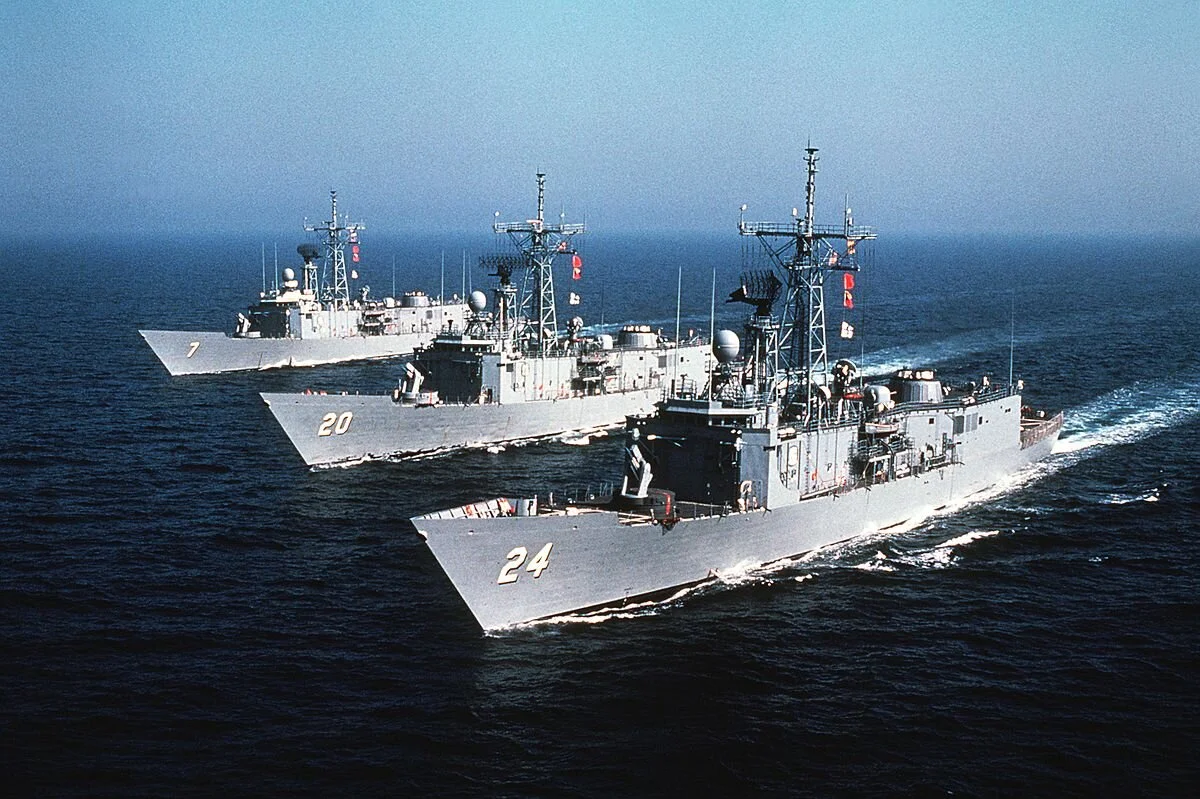
1200px-Oliver_Hazard_Perry-class_frigates_underway_in_1982.JPEG

Report to Congress on Navy Force Structure

December 18, 2019 7:39 AM

USNI.org

The following is the Dec. 16, 2019 Congressional Research Service report, Navy Force Structure and Shipbuilding Plans: Background and Issues for Congress.

From the report

The current and planned size and composition of the Navy, the rate of Navy ship procurement, and the prospective affordability of the Navy’s shipbuilding plans have been oversight matters for the congressional defense committees for many years.

On December 15, 2016, the Navy released a force-structure goal that calls for achieving and maintaining a fleet of 355 ships of certain types and numbers. The 355-ship force-level goal is the result of a Force Structure Assessment (FSA) conducted by the Navy in 2016. A new FSA—referred to as the Integrated Naval FSA (INFSA), with the term naval referring to both the Navy and Marine Corps (i.e., the two naval services)—is now underway as the successor to the 2016 FSA. The Acting Secretary of the Navy states that he expects the INFSA to be published no later than January 15, 2020.

Statements from Department of the Navy (DON) officials suggest that the INFSA could result in a once-in-a-generation change in the Navy’s fleet architecture, meaning the mix of ships that make up the Navy and how those ships are combined into formations and used to perform various missions. DON officials suggest that the INFSA could shift the fleet to a more distributed architecture that includes a reduced proportion of larger ships, an increased proportion of smaller ships, and a newly created category of large unmanned surface vehicles (USVs) and large unmanned underwater vehicles (UUVs). Such a change in fleet architecture could alter, perhaps substantially, the mix of ships to be procured for the Navy and the distribution of Navy shipbuilding work among the nation’s shipyards.

The Navy’s proposed FY2020 budget requests funding for the procurement of 12 new ships, including one Gerald R. Ford (CVN-78) class aircraft carrier, three Virginia-class attack submarines, three DDG-51 class Aegis destroyers, one FFG(X) frigate, two John Lewis (TAO-205) class oilers, and two TATS towing, salvage, and rescue ships. The Navy’s FY2020 five-year (FY2020-FY2024) shipbuilding plan includes 55 new ships, or an average of 11 new ships per year.

The Navy’s FY2020 30-year (FY2020-FY2049) shipbuilding plan includes 304 ships, or an average of about 10 per year. If the FY2020 30-year shipbuilding plan is implemented, the Navy projects that it will achieve a total of 355 ships by FY2034. This is about 20 years sooner than projected under the Navy’s FY2019 30-year shipbuilding plan—an acceleration primarily due to a decision announced by the Navy in April 2018, after the FY2019 plan was submitted, to increase the service lives of all DDG-51 destroyers to 45 years. Although the Navy projects that the fleet will reach a total of 355 ships in FY2034, the Navy in that year and subsequent years will not match the composition called for in the FY2016 FSA.

One issue for Congress is how the INFSA will change the Navy’s fleet architecture, the Navy’s current 355-ship force-level goal, the mix of Navy ships to be procured, and the distribution of Navy shipbuilding work among the nation’s shipyards. A related issue for Congress is the degree to which the results of the INFSA will be incorporated into the Navy’s proposed FY2020 budget, and how Congress should assess the Navy’s proposed FY2020 budget if additional aspects of the INFSA will not become clear until the Navy submits its proposed FY2022 budget or its proposed FY2023 budget. Another issue for Congress concerns the prospective affordability of the Navy’s 30-year shipbuilding plan. Another issue for Congress concerns the potential impacts on FY2020 Navy shipbuilding programs of using one or more continuing resolutions to fund DOD operations for at least some portion of FY2020. Decisions that Congress makes regarding Navy force structure and shipbuilding plans can substantially affect Navy capabilities and funding requirements and the U.S. shipbuilding industrial base.

5601540.jpg

Report to Congress on U.S. Navy Frigate FFG(X) Program

December 17, 2019 1:48 PM

USNI.org

The following is the Dec. 16, 2019 Congressional Research Service report, Navy Frigate (FFG[X]) Program: Background and Issues for Congress.

From the report

The FFG(X) program is a Navy program to build a class of 20 guided-missile frigates (FFGs). The Navy wants to procure the first FFG(X) in FY2020, the next 18 at a rate of two per year in FY2021-FY2029, and the 20th in FY2030. The Navy’s proposed FY2020 budget requests $1,281.2 million for the procurement of the first FFG(X). The Navy’s FY2020 budget submission shows that subsequent ships in the class are estimated by the Navy to cost roughly $900 million each in then-year dollars.

The Navy intends to build the FFG(X) to a modified version of an existing ship design—an approach called the parent-design approach. The parent design could be a U.S. ship design or a foreign ship design. At least four industry teams are reportedly competing for the FFG(X) program. Two of the teams are reportedly proposing to build their FFG(X) designs at the two shipyards that have been building Littoral Combat Ships (LCSs) for the Navy—Austal USA of Mobile, AL, and Fincantieri/Marinette Marine (F/MM) of Marinette, WI. The other two teams are reportedly proposing to build their FFG(X) designs at General Dynamics/Bath Iron Works, of Bath, ME, and Huntington Ingalls Industries/Ingalls Shipbuilding of Pascagoula, MS.

On May 28, 2019, it was reported that a fifth industry team that had been interested in the FFG(X) program had informed the Navy on May 23, 2019, that it had decided to not submit a bid for the program. This fifth industry team, like one of the other four, reportedly had proposed building its FFG(X) design at F/MM.

On June 20, 2019, the Navy released its Request for Proposals (RFP) for the Detail Design and Construction (DD&C) contract for up to 10 ships in FFG(X) program (the lead ship plus 9 option ships). Responses to the RFP are due by August 22, 2019. The Navy plans to award the contract in July 2020.

The FFG(X) program presents several potential oversight issues for Congress, including the following:

  • whether to approve, reject, or modify the Navy’s FY2020 funding request for the program;

  • whether the Navy has appropriately defined the cost, capabilities, and growth margin of the FFG(X);

  • the Navy’s intent to use a parent-design approach for the FFG(X) program rather than develop an entirely new (i.e., clean-sheet) design for the ship;

  • cost, schedule, and technical risk in the FFG(X) program;

  • whether any additional LCSs should be procured in FY2020 as a hedge against potential delays in the FFG(X) program;

  • the potential industrial-base impacts of the FFG(X) for shipyards and supplier firms;

  • whether to build FFG(X)s at a single shipyard, as the Navy’s baseline plan calls for, or at two or three shipyards;

  • the potential impact on required numbers of FFG(X)s of a possible change in the Navy’s surface force architecture; and

  • the potential impact on the FFG(X) program of using one or more continuing resolutions (CRs) to fund Department of Defense (DOD) operations for at least some portion of FY2020.

fremm-01.jpg

House, Senate Defense Bill Signs Off on New Shipbuilding Programs, Restricts Others

By: Ben Werner

December 10, 2019 2:14 PM • Updated: December 11, 2019 5:53 AM

USNI.org

An artist’s concept of the future carrier Enterprise (CVN-80). DoD Image

Leaders from the House and Senate armed services committees agreed to a $738 billion Fiscal Year 2020 National Defense Authorization Act, which approves funding for several Navy programs but also imposes limits on a few high-profile ship programs.

Both chambers of Congress are expected to vote on the FY 2020 NDAA later this week. The compromise closed some of the gap separating the House and Senate version of the bill passed earlier this year. The House version authorized $733 billion. The Senate based its version on a $750-billion authorization.

Carriers

The FY 2020 NDAA inserts congressional cost controls over the construction of the next two Ford-class carriers, the future Enterprise (CVN-80) and the unnamed CVN-81, which will be bought together in a two-carrier contract signed late last year. Congress wants “to ensure cost visibility associated with the anticipated $4 billion two-carrier cost savings” the Navy says the combined purchase will generate.

The Navy is required to make upgrades to John F. Kennedy (CVN-79), which was christened on Saturday. Congress wants the Navy to ensure Kennedy and all follow-on Ford-class carriers are “capable of operating and deploying with the F–35C aircraft” before completing their post-shakedown availability.

Kennedy was built without some of the necessary upgrades needed to deploy with F-35C Lightning II Joint Strike Fighter. The Navy’s plan was to upgrade Kennedy, Ford and Nimitz-class carriers on a rolling basis.

The FY 2020 compromise bill reaffirms the requirement for the Navy to maintain a minimum of 11 aircraft carriers operating and authorizes the midlife refueling of Nimitz-class carrier USS Harry S. Truman (CVN-75). In April, after a harsh pushback from Congress, Vice President Mike Pence announced the administration was scrapping its plan to mothball Truman.

Shipbuilding

The Navy is authorized to build three Arleigh Burke-class guided-missile destroyers and one new frigate. As the Navy evaluates proposals to build the FFG(X) frigate, price is to be a critical factor when selecting a design, according to the FY 2020 NDAA.

The Navy can expand its amphibious warship fleet, with authorizations to construct a San Antonio-class amphibious transport dock and what would be the third America-class amphibious assault ship.

The Navy’s long-term shipbuilding plan calls for buying eight America-class amphibious warships, though the service and the Marine Corps are contemplating creating an alternate ship to augment the amphibious warship fleet.

Before the Navy moves forward with creating a new class of large surface combatants, the designers need first to incorporate design changes identified during the combat system ship qualification trials and operational test periods of the first Flight III Arleigh Burke-class guided-missile destroyer, according to language in the bill. 

The FY 2020 NDAA authorizes the construction of one large unmanned surface vessel and two medium unmanned surface vessels.

Missiles

The FY 2020 NDAA does not prohibit the Department of Defense from deploying low-yield nuclear weapons, but it neither allows nor prohibits placing these weapons on submarines. The topic of deploying low-yield nuclear weapons was one of the differences between the House and Senate versions of the bill.

The Navy is was instructed, “to ensure that technologies developed for the conventional prompt strike program are transferrable to surface-ship platforms.” The conventional strike mission is setting out to give ships and submarines a long-range capability to hit land targets with little, to no warning at ranges beyond the Navy’s current roster of 1,000 nautical mile-ranged Tomahawk Land Attack Missiles.

Submarines

The FY 2020 NDAA preserves the Navy’s plan to purchase 10 Virginia-class attack submarines. Nine of the submarines in a multiyear contract that covers FY 2019 through 2023 will include the Virginia Payload Module.

The NDAA also authorizes an additional $1.5 billion for submarine construction and supports fully funding the development of the Columbia-class ballistic missile submarine.

Aircraft

The Navy is required to produce an analysis justifying its goal of operating with a 50/50 mix of fourth- and fifth-generation aircraft by 2030.

The FY 2020 NDAA supports the Navy’s budget request for 10 F-35B fighters and 20 F-35C fighters. The FY 2020 NDAA also supports the Navy’s request for 24 F/A-18E/F Super Hornets.

The Navy is also authorized to add three P-8A Poseidon for a total of nine and one E-2D Hawkeye aircraft for a total of five.

Personnel

The Navy is authorized to field a force of 340,500 active-duty personnel. The FY 2020 NDAA also includes a requirement for the Pentagon to complete a comprehensive assessment of child care capacity on military installations. In May, USNI News reported 9,000 kids were on the waitlist to attend child care facilities on Navy bases.

The Marine Corps is required to gender integrate basic training at Parris Island within five years and at San Diego within eight years.

The FY 2020 NDAA also includes base housing reforms and reforms to the way the military moves personnel during a permanent change of station.

The FY 2020 NDAA prohibits the Pentagon from reducing the number of certain military medical billets until the military can make a stronger case supporting the reductions. The Navy’s FY 2020 budget request called for cutting about 3,100 medical personnel, as part of a larger Department of Defense plan to reduce the number of medical personnel.

Ingalls Shipbuilding in May 2019. HII Photo

Ingalls Shipbuilding in May 2019. HII Photo

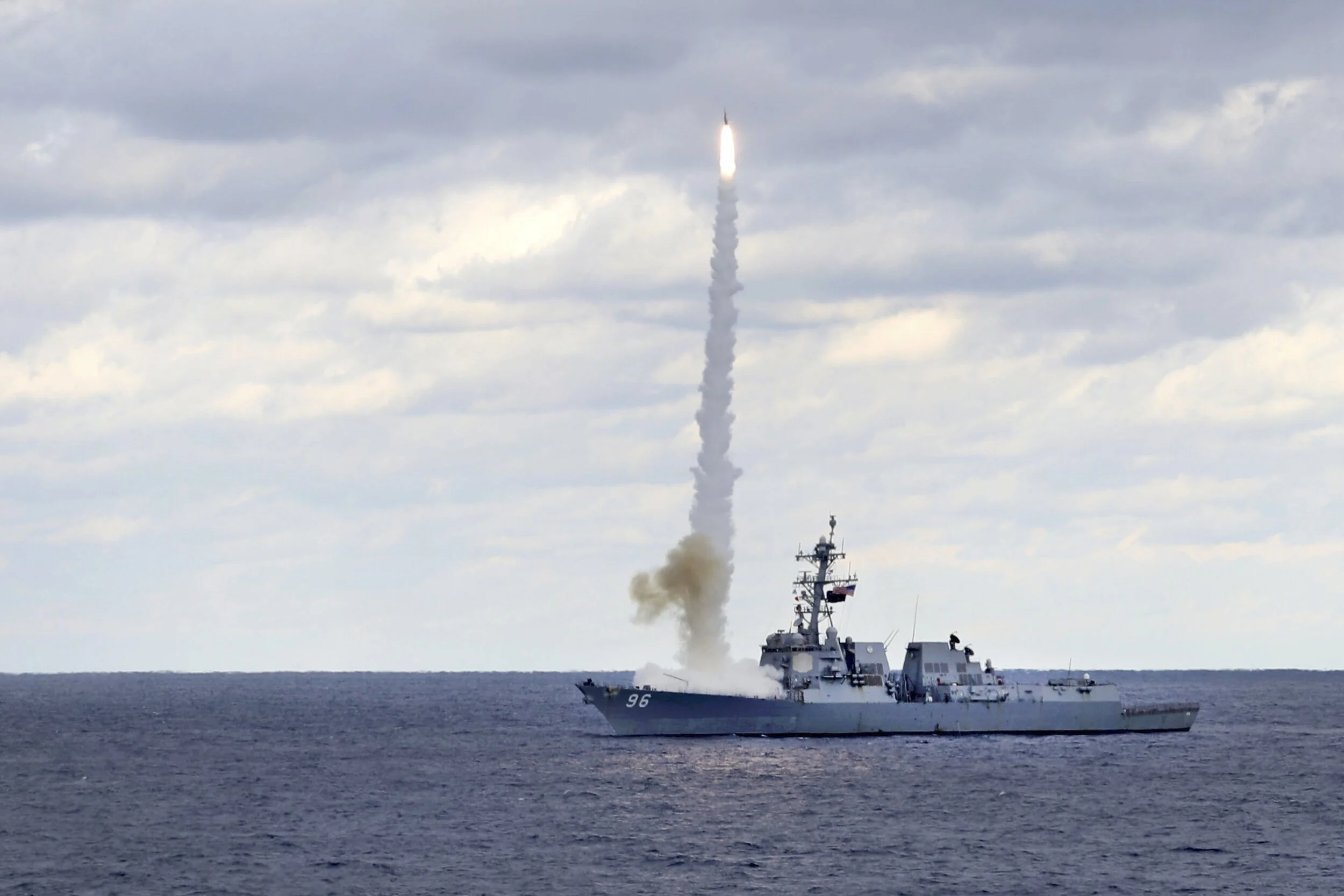
The Arleigh Burke-class guided-missile destroyer USS Bainbridge (DDG 96) launches a Standard Missile (SM) 2 Block IIIA on Nov. 18, 2018. US Navy Photo

The Arleigh Burke-class guided-missile destroyer USS Bainbridge (DDG 96) launches a Standard Missile (SM) 2 Block IIIA on Nov. 18, 2018. US Navy Photo

Rendering of Block V Virginia-class submarine with Virginia Payload Module. General Dynamics Electric Boat Image

Rendering of Block V Virginia-class submarine with Virginia Payload Module. General Dynamics Electric Boat Image

Ten F-35C Lightning II jets of the “Argonauts” of VFA-147 aircraft sit on the flight line at Naval Air Station Lemoore (NASL) on Feb. 28, 2019. US Navy Photo

Ten F-35C Lightning II jets of the “Argonauts” of VFA-147 aircraft sit on the flight line at Naval Air Station Lemoore (NASL) on Feb. 28, 2019. US Navy Photo

Sailors assigned to the Arleigh Burke-class guided-missile destroyer USS Porter (DDG-78) respond to a man-overboard drill during a steel beach picnic in the Mediterranean Sea on Aug. 25, 2019. US Navy Photo

Sailors assigned to the Arleigh Burke-class guided-missile destroyer USS Porter (DDG-78) respond to a man-overboard drill during a steel beach picnic in the Mediterranean Sea on Aug. 25, 2019. US Navy Photo